Resources from industry
reports, white papers and
expert analysis.
Resources from industry reports, white papers and expert analysis.
Case studies
Expert research for operational decision-makers
In August 2024, Maas Energy Works piloted Qube’s continuous methane monitoring at a dairy digester and saw immediate gains in leak detection and repair. On the strength of those results, Maas rolled out Qube at 24 additional digesters across California, Texas, and Idaho.
Here we present three case studies showcasing the early success of the expanded deployments. These results demonstrate Qube’s strong success in RNG, with rapid detection, verified emissions cuts, and measurable increases in retained product.
Independent trials by FluxLab and the Environmental Research & Education Foundation (EREF) confirmed Qube Technologies as the top performer in continuous landfill methane monitoring. In two independent trials, Qube’s continuous monitoring system delivered the most accurate and resilient results—even under extreme weather conditions. With high-resolution, real-time data, Qube empowers landfill operators to better detect, quantify, and reduce emissions. The takeaway? Science-backed performance you can trust..
Insights
Expert insights from companies leading transformation
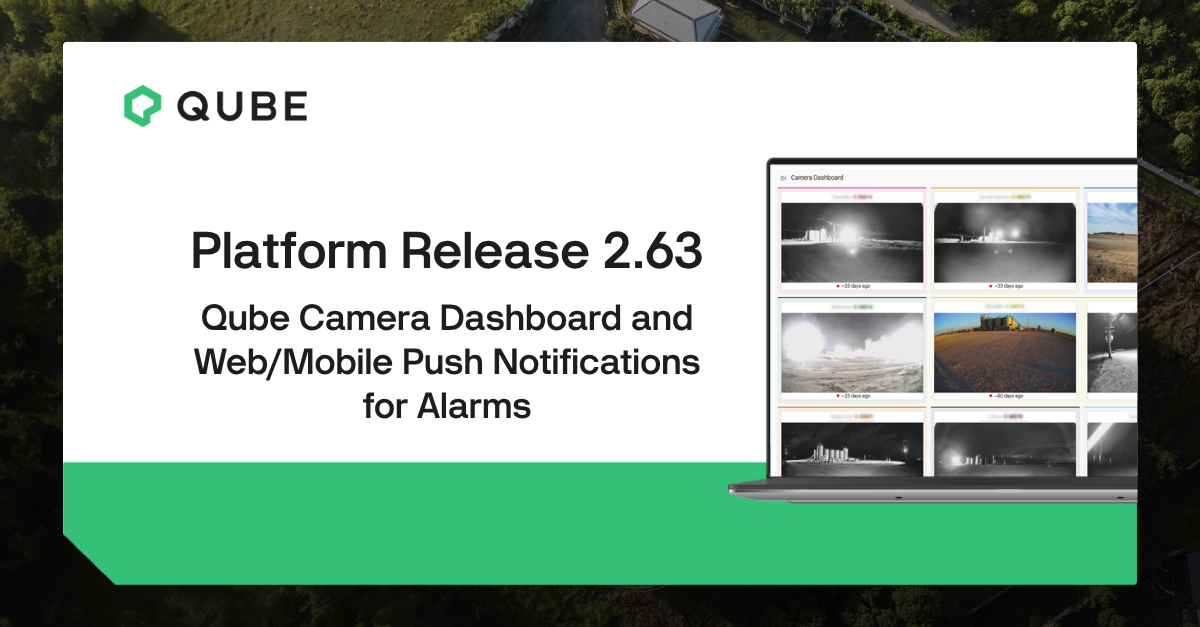
Platform Release 2.63 adds the Qube Camera dashboard and alarm push notifications to your desktop and mobile devices.
Continuous emissions monitoring delivers more than detection. Across a multi-site upstream oil and gas deployment, the data shows a 93% reduction in monthly emission volume, a 75% reduction in inspection costs, and documented equipment repair savings.
Elevated emissions near a tank farm were detected during every truck loading event. Here's how aligning continuous monitoring data with SCADA data traced the emissions to oxygen intrusion causing VRU shutdowns, and how rerouting the vapor line resolved it.
A facility's flare was reading normal tip temperature, but continuous monitoring showed emissions climbing month over month. Here's how cross-referencing monitoring data with operational records traced the issue to a blower running without PID control.
Qube has passed its SOC 2 Type II audit for the third consecutive year. This achievement confirms what our customers already know: our controls, processes, and infrastructure consistently meet the highest standards for data security.
When Qube's continuous monitoring system detected elevated emissions around a BTEX system, the combustor was the obvious suspect. By analysing emission patterns across different control valve configurations, the team used the monitoring data to work through a structured diagnosis. The right repair was made, emissions returned below baseline, and the operator avoided unnecessary capex on equipment the data had already cleared.
Qube Technologies has worked with the NGIF Emissions Testing Centre to test and validate its continuous emissions monitoring hardware, data models, and platform at Tourmaline's West Wolf Lake Gas Plant in Alberta. NGIF has also supported Qube financially across multiple rounds. The latest work at the ETC focuses on Qube Lite and Qube Camera, which operate as standalone tools or integrate with Qube Fenceline to deliver equipment-level source detection, precise localization, and visual confirmation in a single platform.
See how operators are using Qube’s continuous emissions monitoring to investigate equipment issues, confirm repairs, and reduce unnecessary site visits. Real-world case studies demonstrate the measurable value of pairing emissions data with operational context — across cost reduction, site performance, and emissions management.
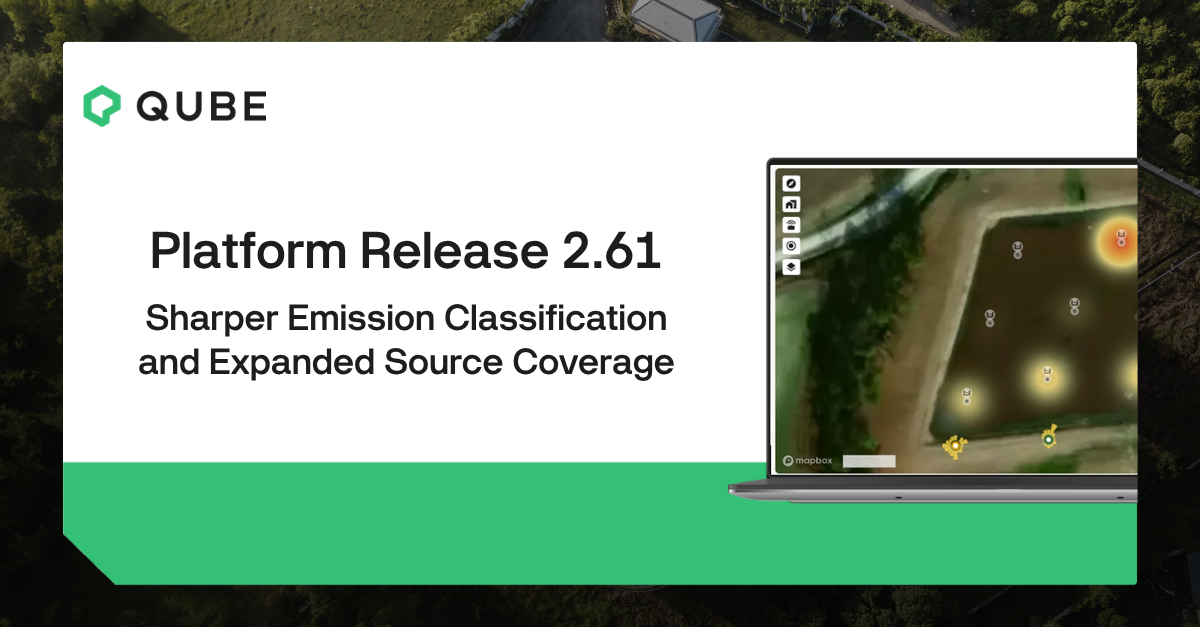
Release 2.61 adds more volume classifications for events and adds anchor trenches as a source category.
Fenceline and source-level emissions sensors are often treated as competing approaches, but the strongest monitoring programs use both. Fenceline Qubes excel at site-level detection and quantification, while source-mounted sensors like Qube Lite pinpoint exactly which piece of equipment is leaking. Deployed together, the two technologies compensate for each other's blind spots, delivering cost-effective, comprehensive detection, localization, and quantification.
MiQ Certification is changing how natural gas is evaluated by linking methane performance to market value. This blog explains how the framework works, why continuous monitoring matters, and how operators can use measurement-backed data to strengthen certification, improve methane management, and access differentiated gas markets.
Qube’s continuous monitoring supports operators in their journey toward the OGMP 2.0 Level 5 Gold Standard. Here is an overview of the framework, its significance, and how Qube facilitates a seamless transition to Level 5 reporting.
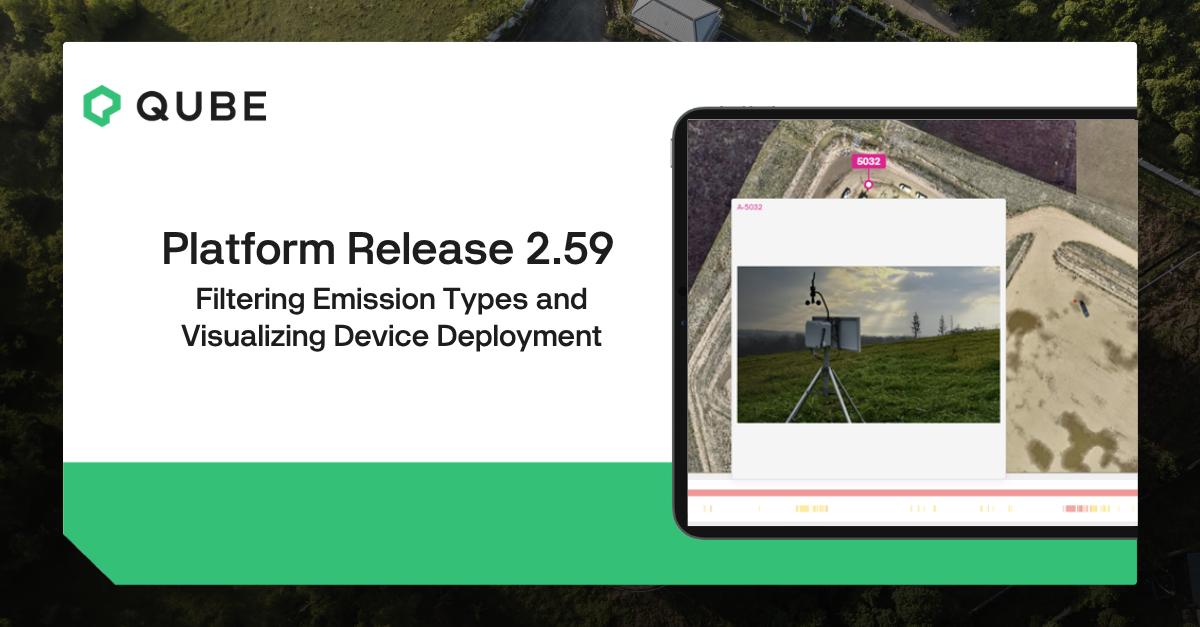
Release 2.59 helps users classify and review emission types faster and gives clearer visual context for devices deployed in the field.
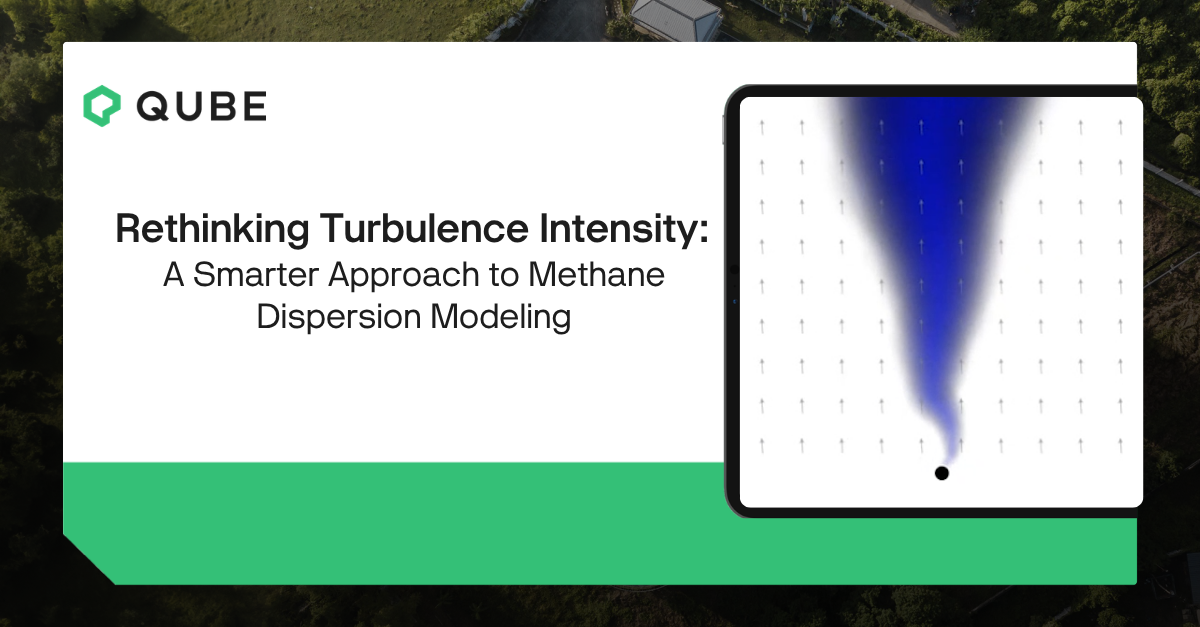
Emission models are just as important as the devices used to detect methane.
Here, we show how we have improved our emissions model to better account for turbulence, the rapid fluctuations in wind direction and speed that drive dispersion.
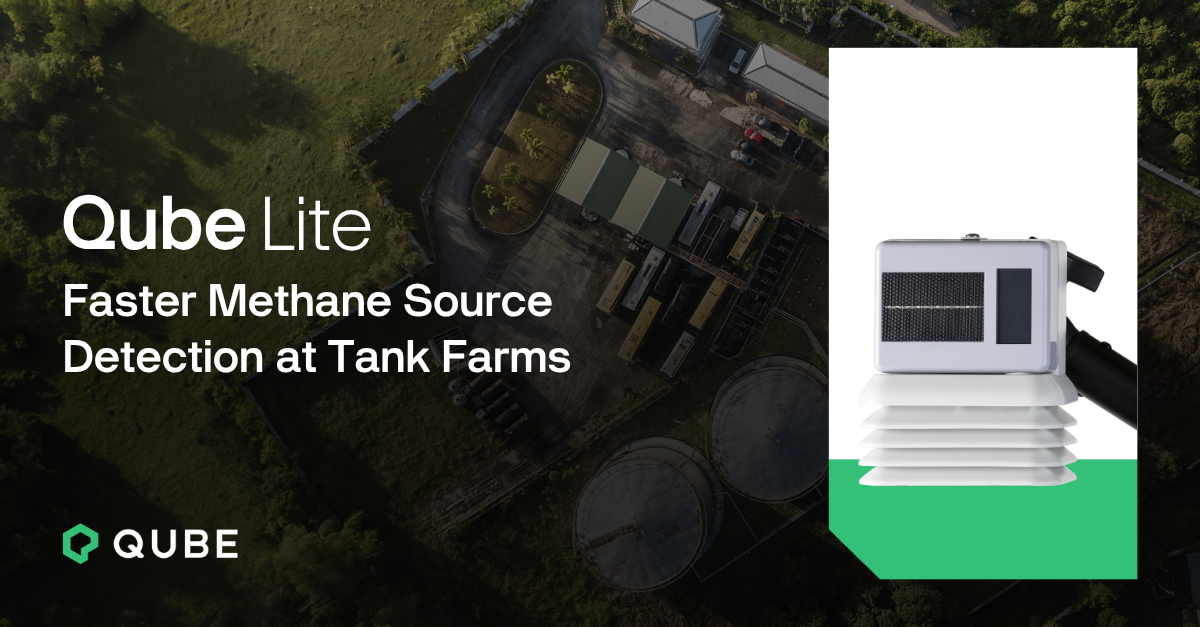
When potential methane sources are located close together, how do you know which unit is actually emitting?
This case study shows how Qube Lite, our new intrinsically safe methane sensor, helps operators distinguish emission source from a single tank at a tank farm.
Qube's site dashboard makes it simple to visualize emissions, spot trends and track repairs.
This walkthrough shows how the platform connects to site equipment and monitoring devices, including Qube Fenceline, Qube Lite and Qube Camera.
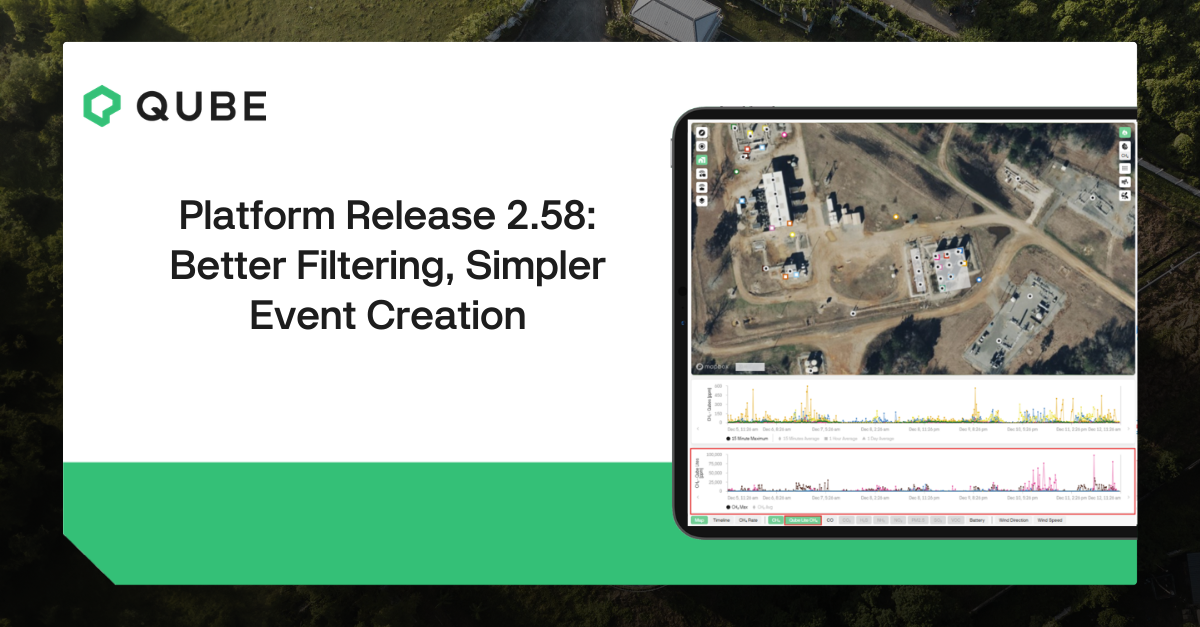
Release 2.58 helps you focus on the emissions that matter, streamlines day-to-day workflows, and keeps alarm follow-up clear.
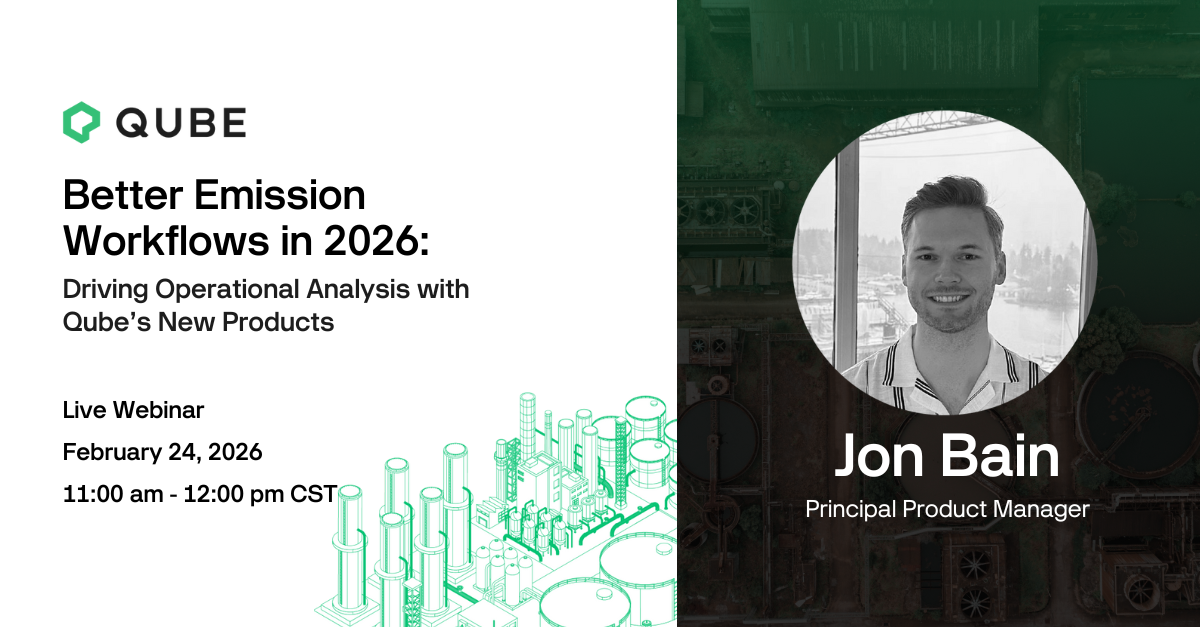
Qube now delivers equipment-level monitoring (Qube Lite) and imaging (Qube Camera) integrated directly with your process data (e.g., SCADA). By combining emission data with real-time process information, operators gain the context needed to distinguish between routine operations—like venting or blowdowns—and actual equipment failures.
Beyond oil and gas, continuous monitoring is an established technology for managing emissions at diverse sites like landfills, mines, and biogas facilities. Qube Technologies recently shared results from a validation program conducted in partnership with FluxLab, focusing on landfill methane detection at scale.
CALGARY, AB – Qube Technologies (“Qube”), the global leader in continuous emissions monitoring, is pleased to announce the successful closing of a new funding round led by existing investors TC Energy with participation from NGIF Capital and other strategic investors. This capital infusion follows a landmark 2025 for the company and is earmarked to accelerate the deployment of Qube’s expanded product portfolio across several industries.
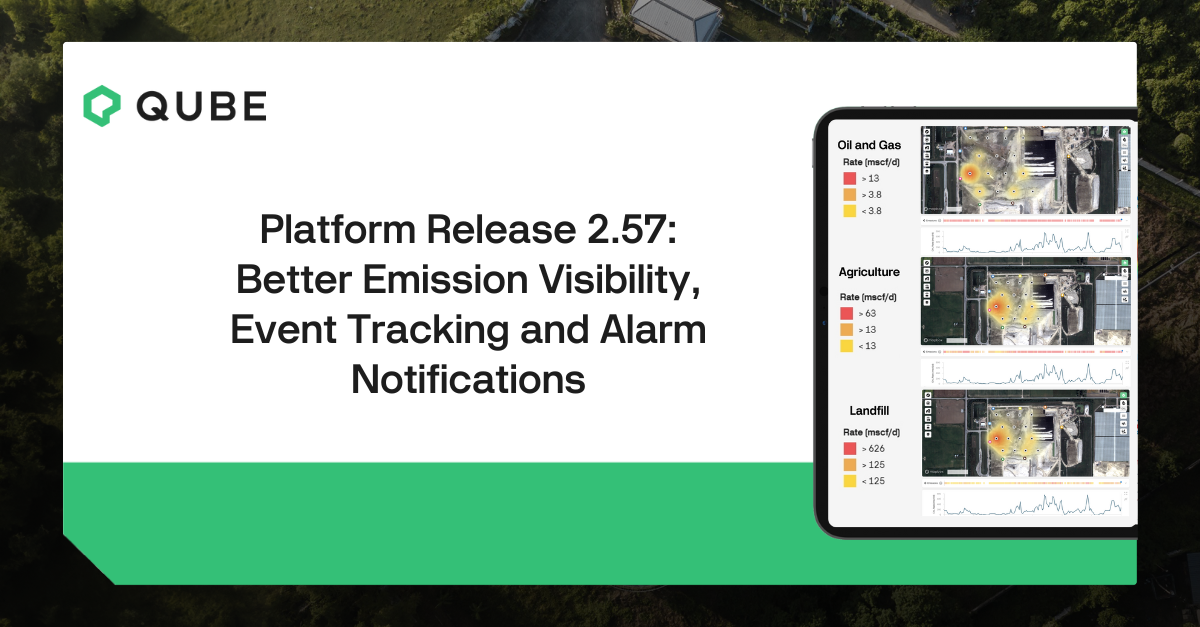
Release 2.57 delivers updates to the Emissions Timelines, Event Log page, and Alarm email notifications.
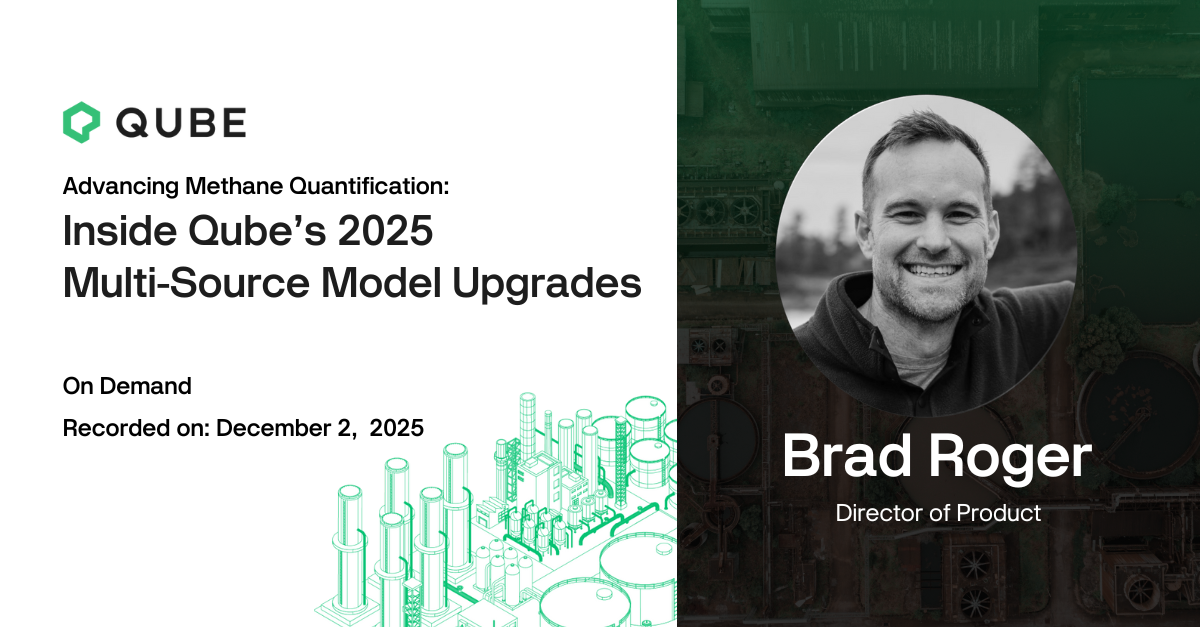
Here we show how improvements to our source modeling resulted in better detection of emissions at heights - like storage tanks. These results are verified by blind, third-party testing at METEC in 2025 where Qube’s continuous monitoring detected all releases from heights during the testing period.
What’s New?
Improved emission event bounding that accounts for source coverage
Source coverage is calculated based on whether devices are downwind of a particular source at a given time
We use short term probability to determine if correlation between source coverage and methane readings is coincidence or correlated
Given high enough probability, we can fill in short gaps and extend emissions
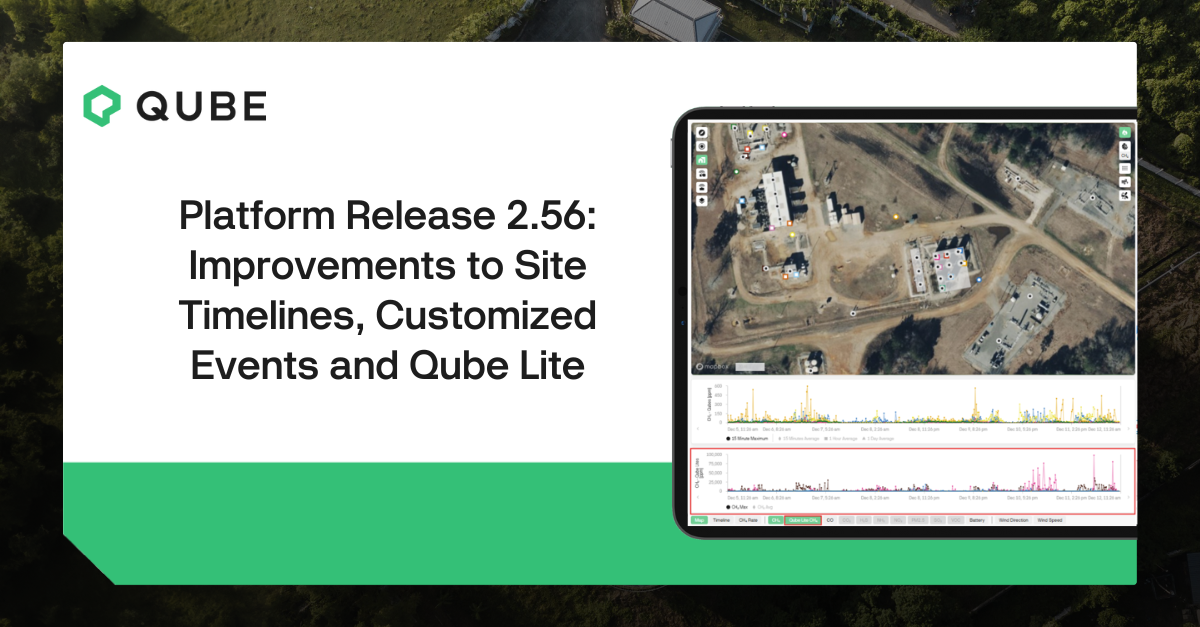
Release 2.56 brings user-created events and other improvements to the site timeline as well as better emissions visibility by Qube Lite.
Independent testing at Colorado State University’s METEC Advancing Development of Emissions Detection (ADED) program shows that Qube’s continuous monitoring system reliably detects the leaks that drive most methane emissions at oil and gas sites. Compared with our 2024 campaign, Qube delivered stronger performance under more demanding test conditions.
In this article we walk through the results in four areas: localization, emission rate prediction, detection capability, and quantification. We also link to the final METEC report so you can review the full third-party results.
Release 2.55 is here. If you manage emission monitoring for a subset of assets, this update is for you. Set your Default Filter to focus the Overview and Emission Analytics on only your sites or regions and optionally limit alarm notifications to the same filter to cut noise.
For continuous monitoring, Probability of Detection (PoD) can be framed as a function of time. Detection confidence grows with each measurement window. Here we explain how controlled-release testing and time segmentation translate PoD into Time-to-Detection (TtD) and contrast that with single-pass survey methods. For operators, this provides a practical way to set expectations for how quickly a continuous system will find different-sized events and why that matters for response.
Most LDAR methods capture only a snapshot, so they miss when an event starts, when it ends, and how long it lasts. Without that timeline, it can be challenging to quantify released volume, verify repairs, or determine whether the source is constant, intermittent, or tied to specific operations. Qube’s continuous monitoring provides 24/7 data that time-bounds emission events, enabling accurate volume estimates and confident repair verification.
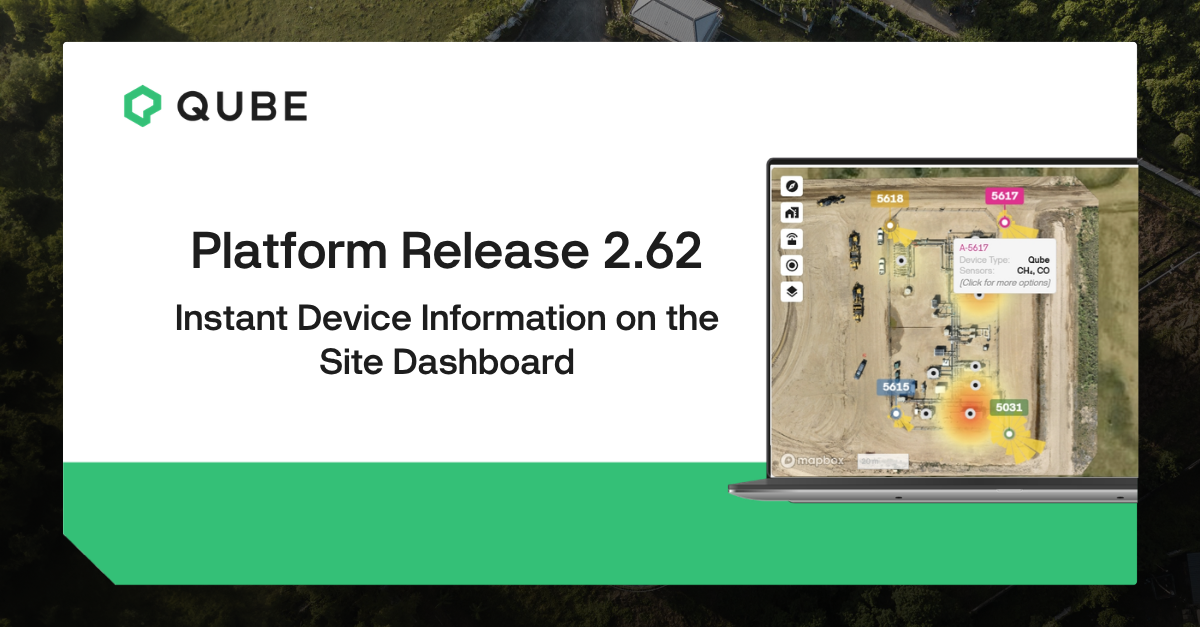
Release 2.54 is live. Operators running mixed deployments of Qube Axon and Qube Lite can now identify device type at a glance, distinguish severity faster, and tailor Qube Lite alarms to each monitored equipment. It’s improved operational awareness and faster responses.
White papers
Expert research for operational decision-makers
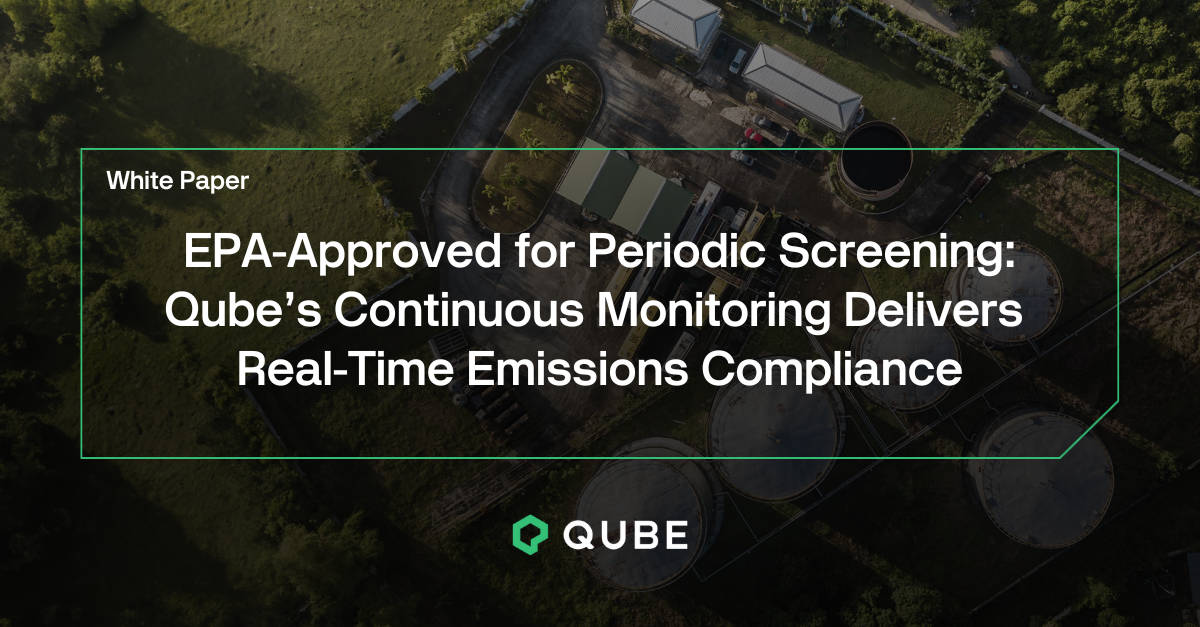
In March 2025, Qube Technologies won EPA approval as an Alternative Test Method for methane periodic screening under NSPS Subpart OOOOb, EG Subpart OOOOc and Subpart OOOOa. Operators can now rely on Qube’s continuous monitoring system instead of—or alongside—optical gas imaging or Method 21 surveys.
Our report explains the regulatory context, shows how Qube meets EPA performance thresholds and highlights a case study where periodic screening cut site inspections.
It’s a practical guide for oil and gas teams seeking compliant, cost-effective and scalable emissions monitoring.
Online events
Live conversations with leaders shaping modern operations
Ready for a clearer view
of your operations?
of your operations?
Ready for a clearer view
of your operations?
of your operations?