
How Continuous Monitoring Identified the Right Problem and Avoided the Wrong Fix
A malfunctioning back pressure regulator at a tank and separator went undetected until Qube’s continuous monitoring flagged it. Here's how real-time data and notifications prevented a costly cascade of equipment failures.
Introduction
In a well-run operation, elevated emissions should trigger a diagnosis that rapidly identifies the issue. This case study examines how continuous monitoring helped an operator work through a structured investigation of a BTEX system emissions event. The combustor was the obvious early candidate but the monitoring data pointed to the BTEX system. The difference between those two conclusions had direct cost savings for the repair.
The Problem: Emissions Tied to the BTEX System Operation
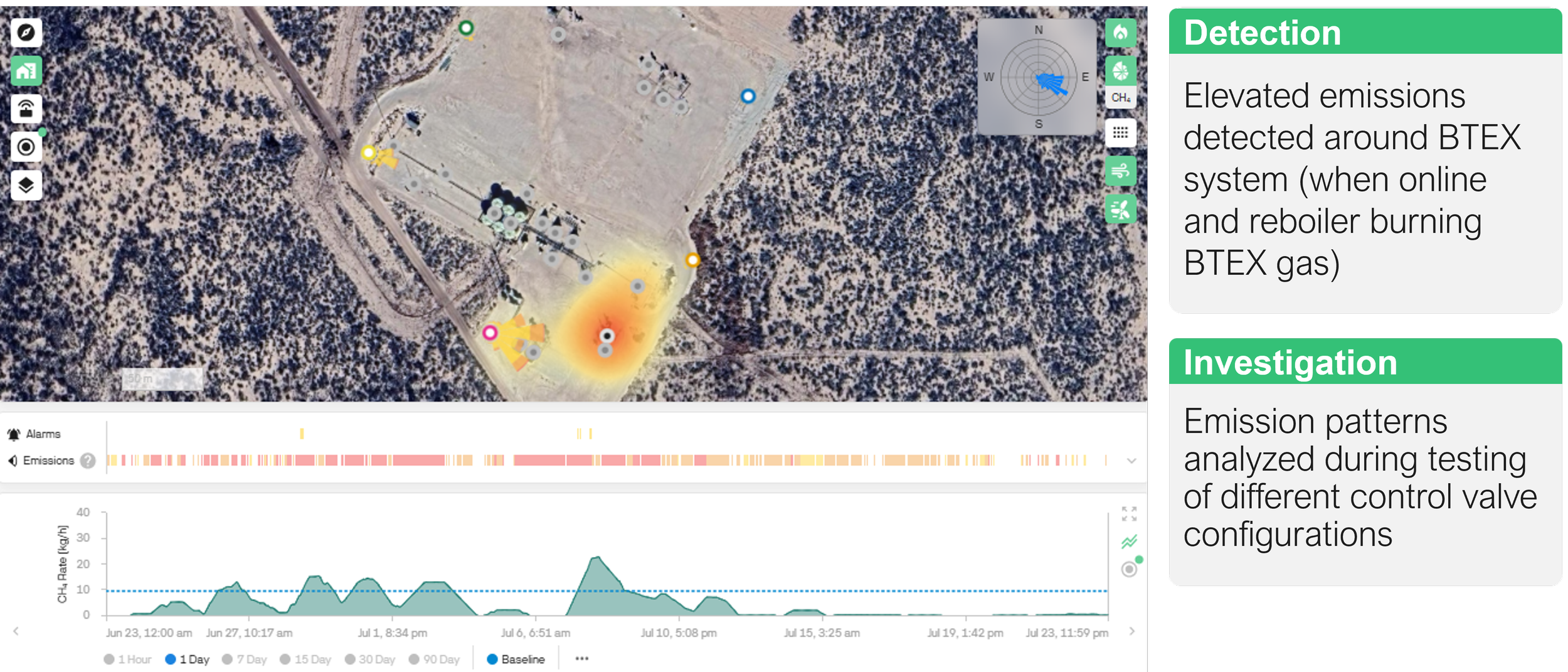
Qube's continuous monitoring system detected elevated emissions around the BTEX system. The pattern was consistent: readings were elevated when the system was online and the reboiler was burning BTEX gas. That correlation confirmed the BTEX system was the source area, but it did not identify which component within the system was responsible. Without that precision, any repair decision would have been based on assumption rather than data. In a system with multiple potential emission points, playing a guessing game on the source may end up successful but at the sacrifice of capital expenditures.
The Investigation: Testing Hypotheses Before Committing to a Fix
Rather than proceeding directly to repair, the team used the monitoring data to run a structured investigation. Emission patterns were analysed across tests of different control valve configurations, allowing the team to evaluate equipment behavior against live monitoring data. The combustor was considered — it was a reasonable hypothesis given the system behavior and the case study's original framing as a combustor evaluation. The data assessed it and cleared it. This is where continuous monitoring's diagnostic value becomes distinct from simple detection: a continuous, time-resolved data stream lets operators test and eliminate hypotheses before a repair crew is dispatched.
Root Cause: A Leaking PSV on the BTEX Coils
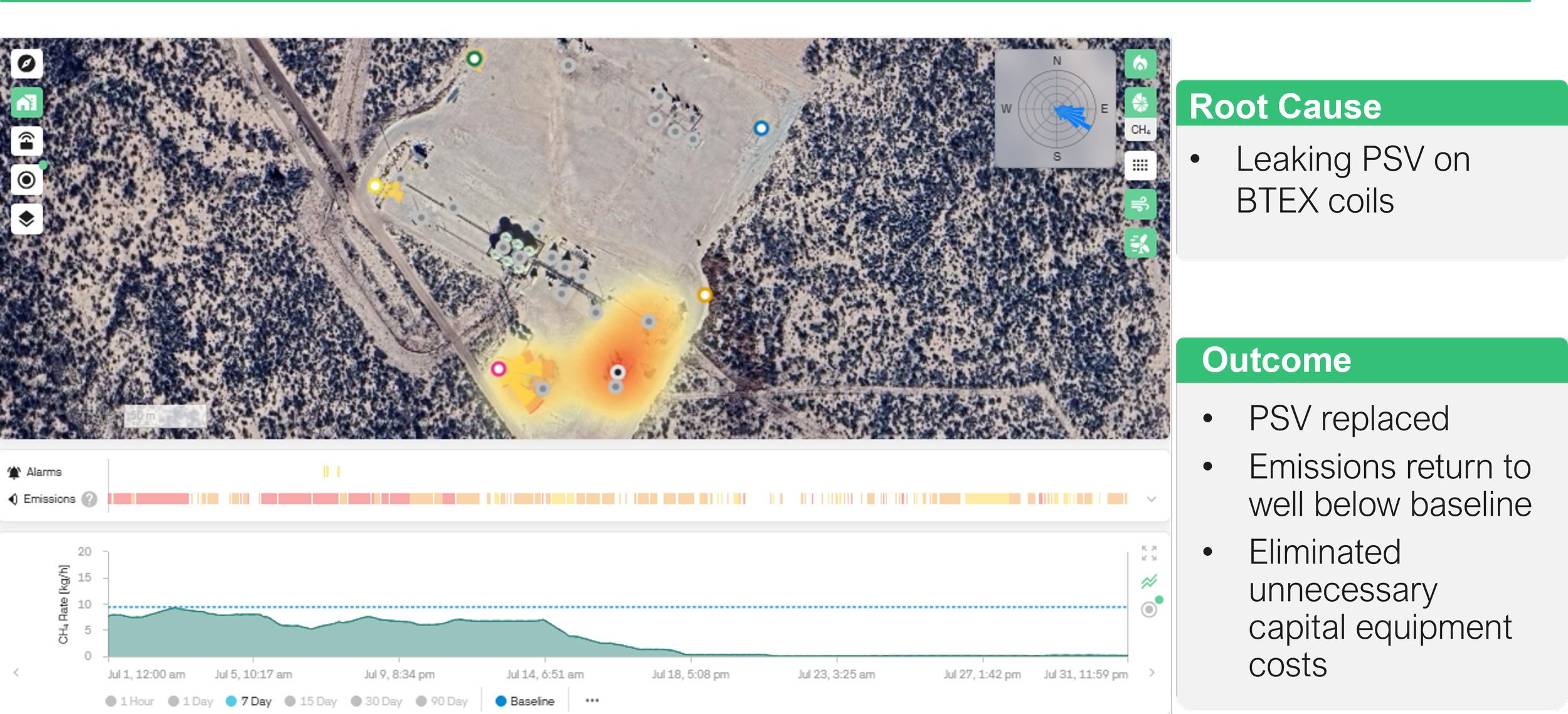
The investigation identified a leaking pressure safety valve (PSV) on the BTEX coils as the source of elevated emissions. A PSV is designed to open and relieve excess pressure under specific conditions; when it leaks, it allows gas to escape to atmosphere outside those conditions, producing a persistent emissions signal tied to system operation. Pinpointing the PSV rather than the combustor was a consequential distinction. Combustor replacement or upgrades represent a significant capital outlay. Replacing a PSV does not.
Outcome: Right Repair, Confirmed Results
The PSV was replaced and emissions returned to well below the pre-event baseline. Post-repair monitoring provided documented confirmation that the repair was effective — no need to wait on a scheduled inspection to close the loop. The operator also avoided the combustor expenditure the initial symptoms might have prompted, eliminating an unnecessary capital cost without that avoidance being a gamble. The data made the case.
Business Impact: Confidence in Operational Decisions
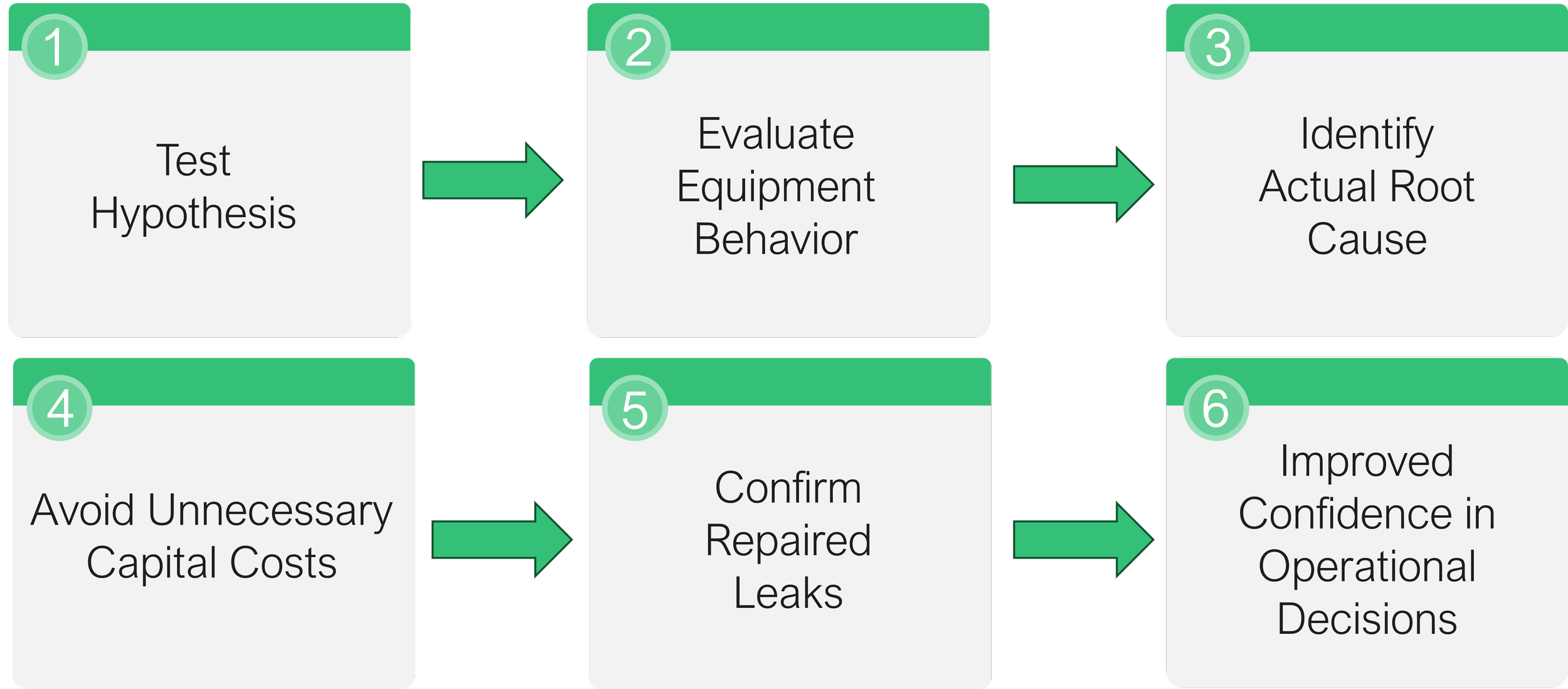
The most transferable outcome from this case study is the diagnostic process itself. Moving through a structured sequence:
Test the hypothesis
Evaluate equipment behavior
identify the actual root cause
Avoid unnecessary capital costs
Confirm any leaks have been repaired
Gain confidence in operational decisions
This process turned an emissions event into an operational decision with data behind it. In operations managing complex systems like BTEX skids, that process has real value beyond any single repair. It changes how teams approach equipment decisions and builds the kind of documented record that supports both regulatory reporting and internal performance reviews.
Key Takeaway
This case study illustrates what operations and environmental teams increasingly recognize: continuous monitoring is an established tool for detecting equipment issues before they escalate to full-on outages. Real-time data narrows the gap between failure and detection, enables informed field investigation, accelerates repair verification, and prevents small malfunctions from becoming expensive equipment events. For operators managing multiple facilities across large asset bases, that value compounds with every site added to the monitoring network.
Interested in how Qube Technologies can improve confidence in your operational troubleshooting?
FAQs
-
BTEX stands for benzene, toluene, ethylbenzene, and xylene — volatile organic compounds (VOCs) present in produced hydrocarbons. BTEX recovery systems capture these compounds during gas processing and dehydration to prevent them from being released to atmosphere. The reboiler in a BTEX unit uses heat to drive the separation process. When any component in the system leaks or malfunctions, VOCs that should remain in the controlled process can escape, registering as elevated emissions at the facility level. Because the system operates continuously while online, even a small leak can accumulate into a meaningful emissions event.
-
A pressure safety valve (PSV) is a relief device designed to open and vent pressure when a system exceeds a set pressure threshold, then reseat and close once pressure normalizes. When a PSV leaks, it fails to hold a proper seal at operating conditions, allowing gas to escape to atmosphere continuously or intermittently — not as an intended pressure relief event, but as an uncontrolled emissions source. In this case, the leaking PSV on the BTEX coils was releasing gas during normal system operation, which is why emissions tracked consistently with the system being online.
-
The investigation tested different control valve configurations and analysed emission patterns against each configuration. A combustor issue would typically produce an emissions signal tied to combustion performance — elevated readings during operation that don't correlate cleanly with specific valve states. The monitoring data showed a pattern more consistent with a leak in the process coils than with combustor performance. By comparing emissions behavior across configurations against what each potential source would produce, the team was able to rule out the combustor before any capital decision was made. This is the core diagnostic value of continuous monitoring: you can test against the data rather than against assumptions.
-
Most discussions of continuous monitoring focus on detection: finding leaks faster than scheduled inspections can. This case study adds a second layer of value — diagnosis. Detection tells you something is wrong. Diagnosis tells you what is wrong and, equally importantly, what is not wrong. In this case, the monitoring data didn't just flag elevated emissions; it guided the team through a structured process that avoided an expensive and unnecessary repair. For operations managing multiple complex systems, that diagnostic capability reduces both the cost of individual repair events and the cumulative cost of misdiagnoses over time.