

Expert Industry Insights
Get current insights from our experts on methane monitoring technology, news, initiatives and regulations.
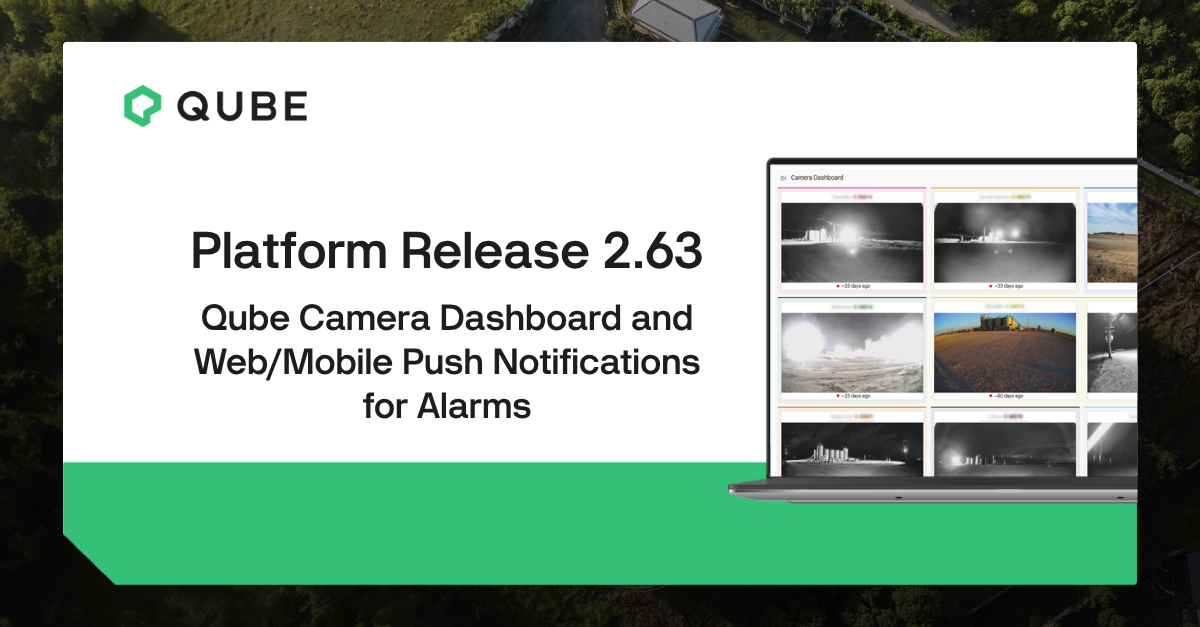
Qube Platform Release 2.63: Camera Dashboard and Alarm Push Notifications
Platform Release 2.63 adds the Qube Camera dashboard and alarm push notifications to your desktop and mobile devices.
The Business Benefits of Continuous Monitoring
Continuous emissions monitoring delivers more than detection. Across a multi-site upstream oil and gas deployment, the data shows a 93% reduction in monthly emission volume, a 75% reduction in inspection costs, and documented equipment repair savings.
How Continuous Monitoring and SCADA Data Connected Truck Loading Events to VRU Shutdowns
Elevated emissions near a tank farm were detected during every truck loading event. Here's how aligning continuous monitoring data with SCADA data traced the emissions to oxygen intrusion causing VRU shutdowns, and how rerouting the vapor line resolved it.
How Continuous Monitoring Caught Flare Combustion Issues That Temperature Monitoring Missed
A facility's flare was reading normal tip temperature, but continuous monitoring showed emissions climbing month over month. Here's how cross-referencing monitoring data with operational records traced the issue to a blower running without PID control.
Qube Passes SOC 2 Type II Audit for the Third Consecutive Year
Qube has passed its SOC 2 Type II audit for the third consecutive year. This achievement confirms what our customers already know: our controls, processes, and infrastructure consistently meet the highest standards for data security.
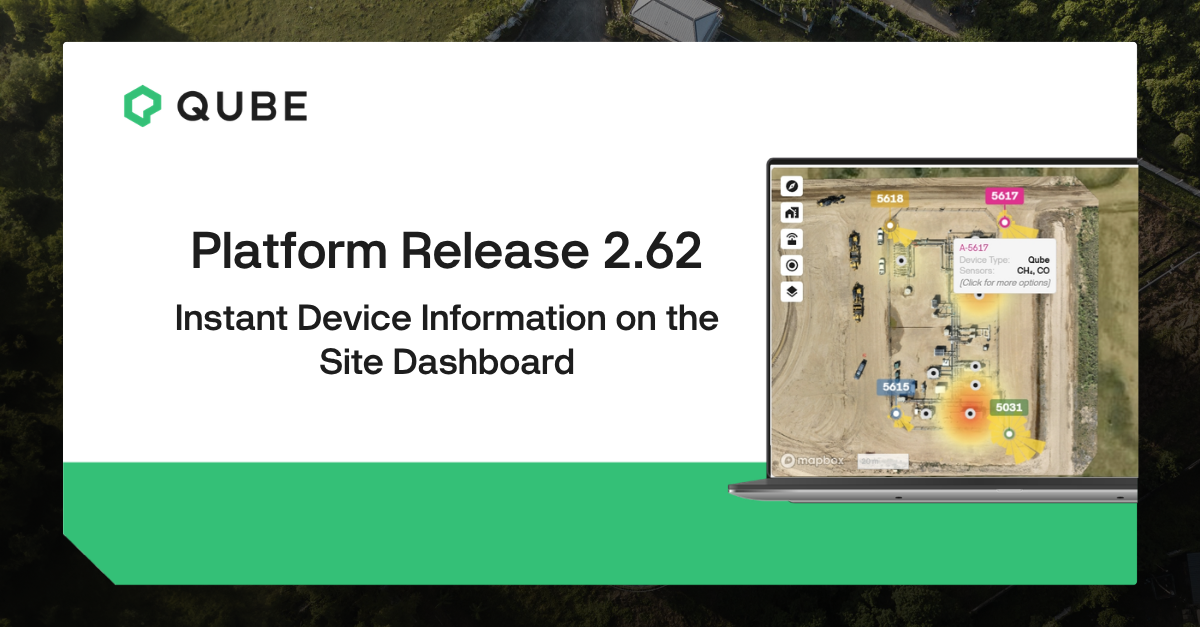
Qube Platform Release 2.62: Instant Device Information on the Site Dashboard
Release 2.62 adds instant device information accessed on the site dashboard.
How Continuous Monitoring Identified the Right Problem and Avoided the Wrong Fix
When Qube's continuous monitoring system detected elevated emissions around a BTEX system, the combustor was the obvious suspect. By analysing emission patterns across different control valve configurations, the team used the monitoring data to work through a structured diagnosis. The right repair was made, emissions returned below baseline, and the operator avoided unnecessary capex on equipment the data had already cleared.
Proven in the Field: Qube Technologies and NGIF ETC Advance Continuous Emissions Monitoring
Qube Technologies has worked with the NGIF Emissions Testing Centre to test and validate its continuous emissions monitoring hardware, data models, and platform at Tourmaline's West Wolf Lake Gas Plant in Alberta. NGIF has also supported Qube financially across multiple rounds. The latest work at the ETC focuses on Qube Lite and Qube Camera, which operate as standalone tools or integrate with Qube Fenceline to deliver equipment-level source detection, precise localization, and visual confirmation in a single platform.

Continuous Monitoring in Practice: Case Studies in Cost, Performance, & Emissions Reduction
See how operators are using Qube’s continuous emissions monitoring to investigate equipment issues, confirm repairs, and reduce unnecessary site visits. Real-world case studies demonstrate the measurable value of pairing emissions data with operational context — across cost reduction, site performance, and emissions management.
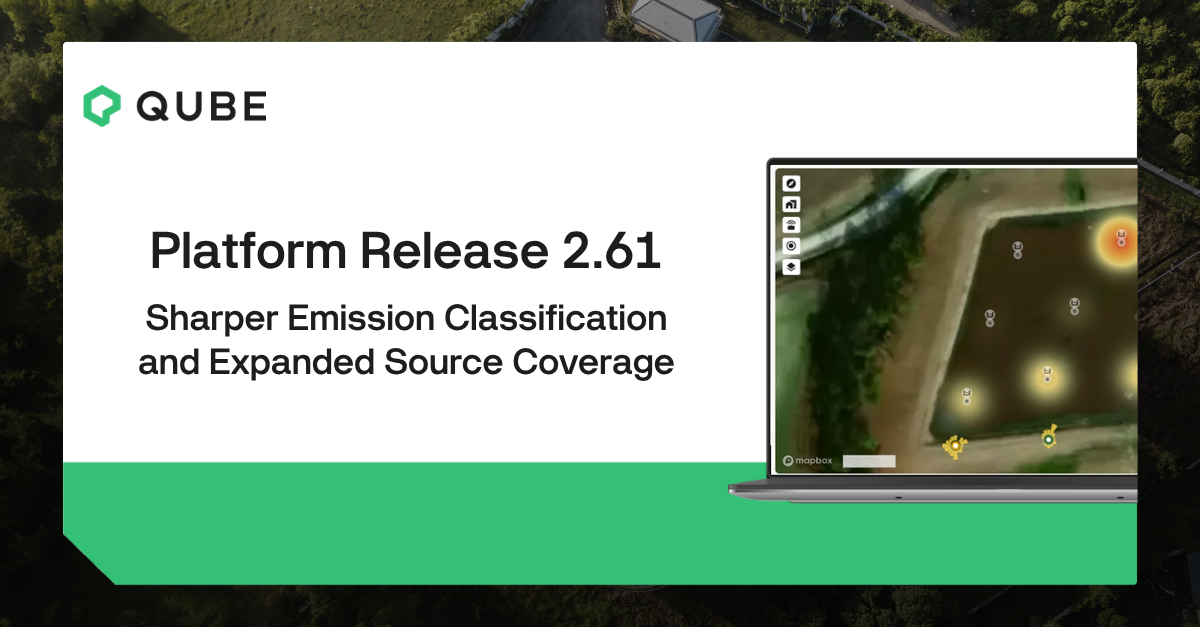
Qube Platform Release 2.61: Sharper Emission Classification and Expanded Source Coverage
Release 2.61 adds more volume classifications for events and adds anchor trenches as a source category.
Why Not Both? The Best Emissions Monitoring Systems Don’t Choose Between Fenceline and Source-Level Detection
Fenceline and source-level emissions sensors are often treated as competing approaches, but the strongest monitoring programs use both. Fenceline Qubes excel at site-level detection and quantification, while source-mounted sensors like Qube Lite pinpoint exactly which piece of equipment is leaking. Deployed together, the two technologies compensate for each other's blind spots, delivering cost-effective, comprehensive detection, localization, and quantification.
MiQ Certification with Continuous Monitoring
MiQ Certification is changing how natural gas is evaluated by linking methane performance to market value. This blog explains how the framework works, why continuous monitoring matters, and how operators can use measurement-backed data to strengthen certification, improve methane management, and access differentiated gas markets.
Achieving OGMP 2.0 Level 5 with Continuous Monitoring
Qube’s continuous monitoring supports operators in their journey toward the OGMP 2.0 Level 5 Gold Standard. Here is an overview of the framework, its significance, and how Qube facilitates a seamless transition to Level 5 reporting.
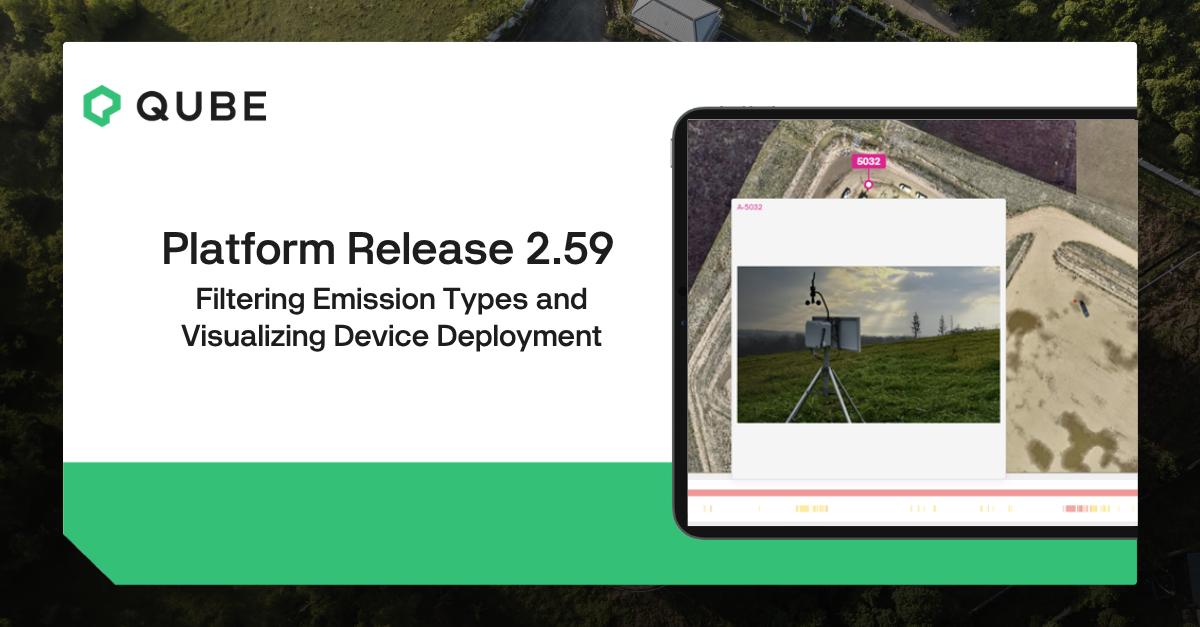
Qube Platform Release 2.59: Easier Emissions Filtering and Better Device Deployment Images
Release 2.59 helps users classify and review emission types faster and gives clearer visual context for devices deployed in the field.
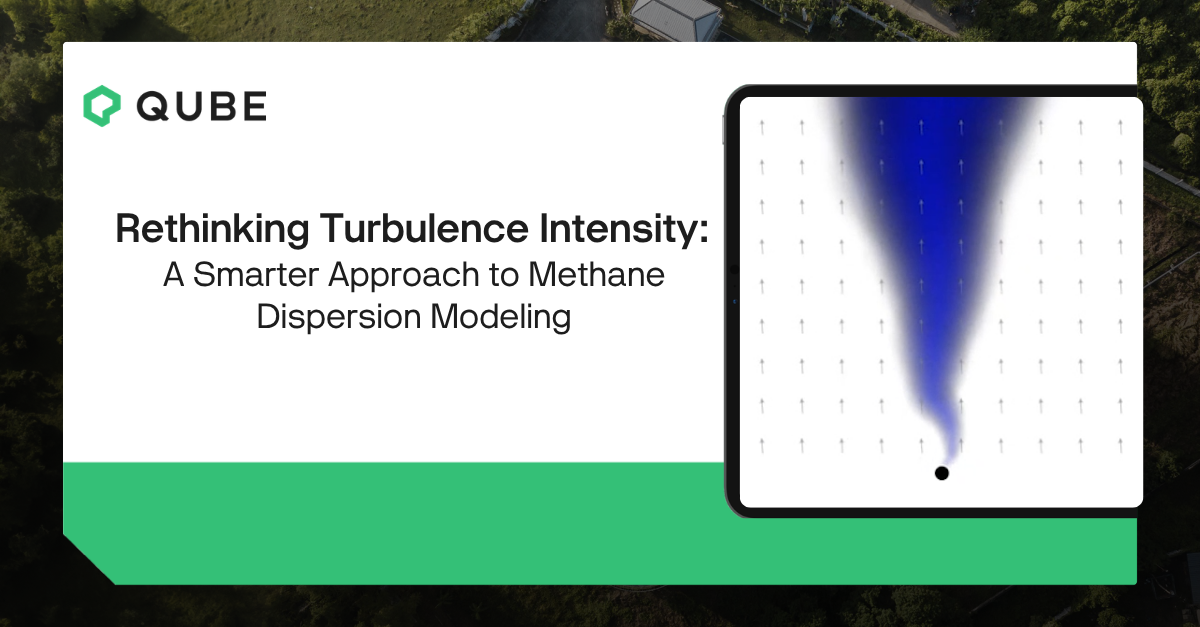
Rethinking Turbulence Intensity: A Smarter Approach to Methane Dispersion Modeling
Emission models are just as important as the devices used to detect methane.
Here, we show how we have improved our emissions model to better account for turbulence, the rapid fluctuations in wind direction and speed that drive dispersion.
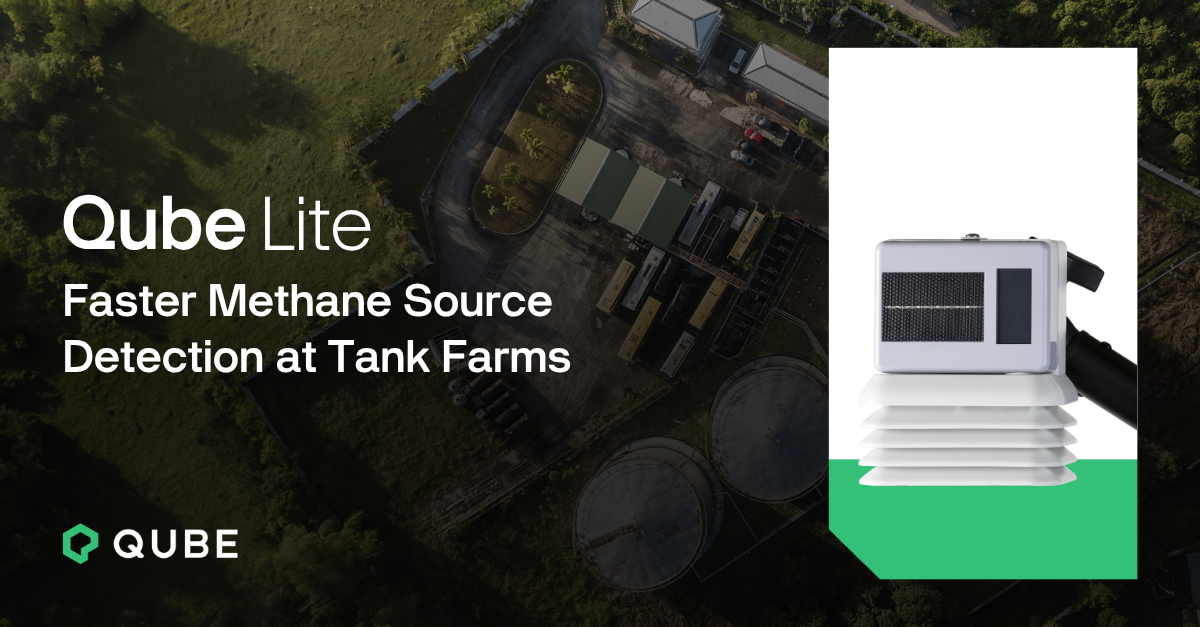
Qube Lite: Faster Methane Source Detection at Tank Farms
When potential methane sources are located close together, how do you know which unit is actually emitting?
This case study shows how Qube Lite, our new intrinsically safe methane sensor, helps operators distinguish emission source from a single tank at a tank farm.

Demonstration: Qube’s Site Dashboard
Qube's site dashboard makes it simple to visualize emissions, spot trends and track repairs.
This walkthrough shows how the platform connects to site equipment and monitoring devices, including Qube Fenceline, Qube Lite and Qube Camera.
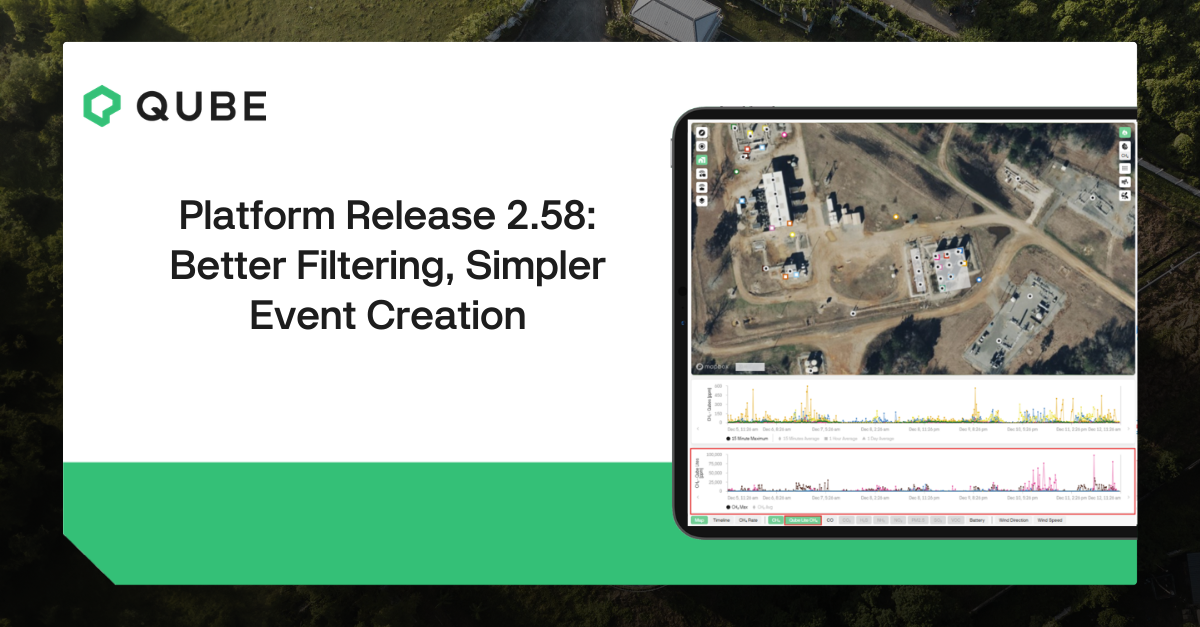
Qube Platform Release 2.58: Better Filtering, Simpler Event Creation
Release 2.58 helps you focus on the emissions that matter, streamlines day-to-day workflows, and keeps alarm follow-up clear.
Better Emission Workflows in 2026: Driving Operational Analysis with Qube’s New Products
Qube now delivers equipment-level monitoring (Qube Lite) and imaging (Qube Camera) integrated directly with your process data (e.g., SCADA). By combining emission data with real-time process information, operators gain the context needed to distinguish between routine operations—like venting or blowdowns—and actual equipment failures.
Does Continuous Monitoring Accurately Detect Landfill Methane? FluxLab Tests Qube
Beyond oil and gas, continuous monitoring is an established technology for managing emissions at diverse sites like landfills, mines, and biogas facilities. Qube Technologies recently shared results from a validation program conducted in partnership with FluxLab, focusing on landfill methane detection at scale.