Subscribe for updates
Resources from industry
reports, white papers and
expert analysis.
Resources from industry reports, white papers and expert analysis.
Case studies
Field-verified success stories from operators deploying Qube’s continuous monitoring
Repeated emission spikes during truck loading were traced to oxygen entering the vapor recovery unit and shutting it down. Rerouting the vapor line fixed it.
Diffuse methane emissions at an unlined RNG lagoon evaded standard walking surveys because the gas passed through soft soil before surfacing at low concentrations. Qube's continuous monitoring detected the leaking seams, allowing targeted soil compaction that lowered measured emissions by 67%.
Monitoring caught a persistent leak from a broken weld on a lagoon cover that walk-by inspections never found. Repairing it cut emissions by 87 percent.
Emissions were climbing even though the flare's temperature looked normal, tracing back to a blower without proper feedback control. Fixing the airflow balance brought emissions back down.
A failing regulator, a leaking hatch, and corroded seals were compounding emissions before equipment damage set in. Catching it early avoided about $9,000 in costs.
Colorado's rules pushed an operator to swap gas-driven pneumatics for compressed air ones, and monitoring confirmed an 80 percent drop in emissions afterward.
Real-time alerts and source localization caught a high-volume separator leak that would otherwise have gone unnoticed over a weekend, and it was repaired within the week.
A methane alert at a Colorado wellsite traced back to a cow that bumped open a valve. Crews shut it in and fenced the area to prevent it happening again.
A Colorado well pad restart triggered a large methane release, traced to leaking level controllers and thief hatches and repaired within a day.
A methane spike at a Permian site turned out to come from a neighboring gas plant, saving the operator an unnecessary inspection.
An alert at a QB Energy tank site led crews to a leaking thief hatch that a visual inspection had missed. Resealing it cut emissions by 97 percent.
After a strong pilot, Maas Energy Works expanded monitoring to 24 more dairy digesters, and these early results show faster leak detection and more gas retained.
Independent FluxLab and EREF trials at a working landfill found Qube the most accurate continuous monitor tested, even under tough weather conditions.
Birch Resources used continuous monitoring to respond immediately to an unexpected flare outage, even as satellite surveys were still catching up.
A methane alert that looked routine turned out to be a produced water spill from a failed manifold, caught and contained before it spread.
A midnight tear in a biogas lagoon was caught and fixed the next day, saving Roeslein Alternative Energy an estimated $200,000 in lost product.
A methane alert that looked routine turned out to be a produced water spill from a failed manifold, caught and contained before it spread.
A sudden emissions jump at a Permian tank battery was traced to faulty valves under high line pressure. Fixing them cut emissions by 63 percent.
Monitoring at a Canadian well pad flagged above-baseline methane at the tank area, leading crews straight to a leaking thief hatch.
A British Columbia facility tracked down excess process heater emissions, cutting monthly methane by 76 percent and carbon monoxide to zero.
At an Oklahoma well battery, monitoring caught a leak other technologies missed entirely. An open thief hatch was found and fixed, cutting emissions by 95 percent.
Methane sensors in a British Columbia pilot traced rising flare emissions to a fouled flame arrestor, which once repaired dropped emissions by 75 percent.
CO and methane sensors traced elevated readings to incomplete combustion in a compressor, cutting methane by 30 percent after tuning.
Monitoring at an Alberta gas plant caught dangerous methane and hydrogen sulfide leaks from new third-party compressor equipment early.
Insights
The latest methane news, product previews, company highlights, and changing regulations
The Qube Lite Gateway Platform is an ultra low cost, intrinsically-safe communications platform with Bluetooth capabilities. Deploy with various sensors across equipment or combine with other continuous monitoring sensors like Qube Lite for rapid, low-cost detection with operational context.
Introducing our new product in development: Qube Handheld Leak Detector. A lightweight, portable emissions monitor with a companion app to track inspections and sync data with the Qube Platform.
ERA has awarded Qube Technologies $2.55 million to advance continuous emissions monitoring platform for methane and greenhouse gas detection. The award is part of a $15.1 million investment in seven technologies led by Calgary companies, announced by the Government of Alberta and ERA. Total value of Qube's project is $7.9 million.
Josh Zhang, Production Team Lead, combines technical curiosity and a talent for building relationships to strengthen how Qube builds and sources its devices.
Introducing our new product in development: Qube OGI. A continuous OGI camera with object detection and classification. It is currently field testing with generous support from the Methane Innovation Collaborative.
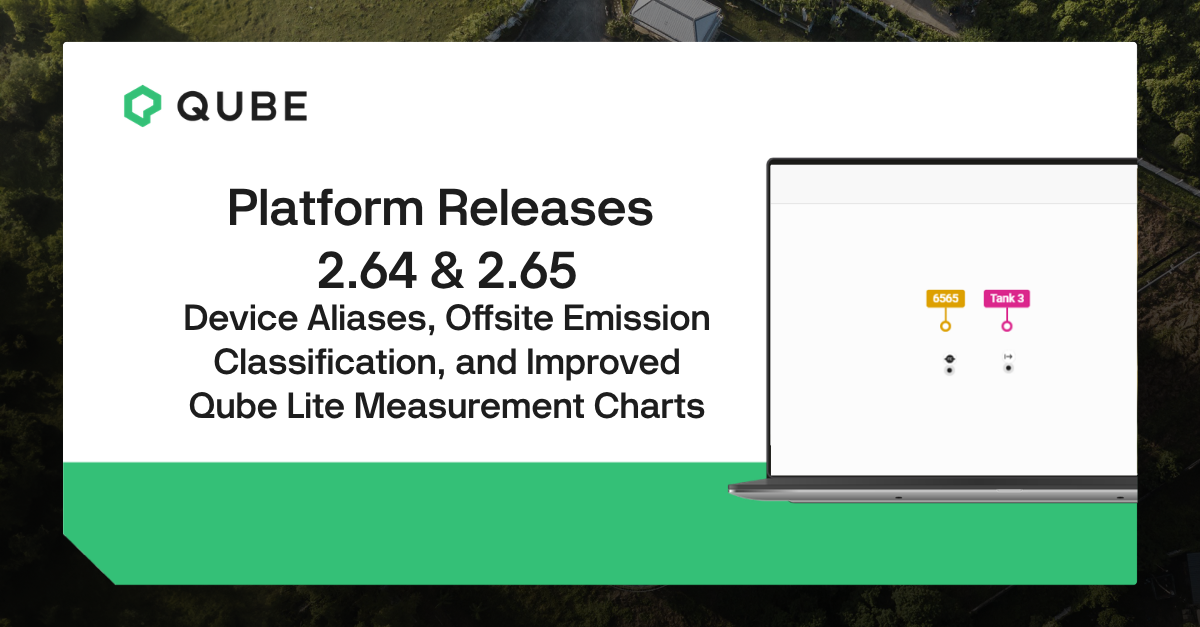
Platform Releases 2.64 & 2.65 bring new and improved features: device aliases, offsite emission classification, and improved Qube Lite measurement charts.
On July 16, 2026, the New Mexico Environment Department (NMED) released a stakeholder review draft of a new rule, 20.2.51 NMAC, Methane Abatement. We summarizes the draft requirements, compare them to existing state and federal rules, and outline the role of continuous monitoring in compliance.
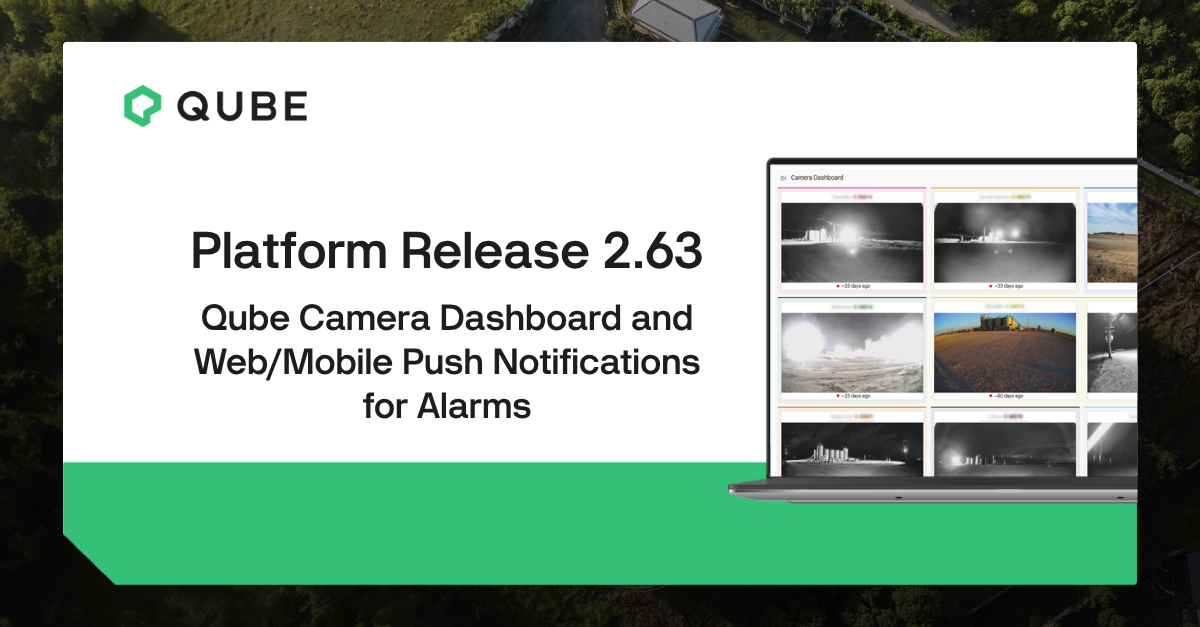
Platform Release 2.63 adds the Qube Camera dashboard and alarm push notifications to your desktop and mobile devices.
Continuous emissions monitoring delivers more than detection. Across a multi-site upstream oil and gas deployment, the data shows a 93% reduction in monthly emission volume, a 75% reduction in inspection costs, and documented equipment repair savings.
Elevated emissions near a tank farm were detected during every truck loading event. Here's how aligning continuous monitoring data with SCADA data traced the emissions to oxygen intrusion causing VRU shutdowns, and how rerouting the vapor line resolved it.
A facility's flare was reading normal tip temperature, but continuous monitoring showed emissions climbing month over month. Here's how cross-referencing monitoring data with operational records traced the issue to a blower running without PID control.
Qube has passed its SOC 2 Type II audit for the third consecutive year. This achievement confirms what our customers already know: our controls, processes, and infrastructure consistently meet the highest standards for data security.
When Qube's continuous monitoring system detected elevated emissions around a BTEX system, the combustor was the obvious suspect. By analysing emission patterns across different control valve configurations, the team used the monitoring data to work through a structured diagnosis. The right repair was made, emissions returned below baseline, and the operator avoided unnecessary capex on equipment the data had already cleared.
Qube Technologies has worked with the NGIF Emissions Testing Centre to test and validate its continuous emissions monitoring hardware, data models, and platform at Tourmaline's West Wolf Lake Gas Plant in Alberta. NGIF has also supported Qube financially across multiple rounds. The latest work at the ETC focuses on Qube Lite and Qube Camera, which operate as standalone tools or integrate with Qube Fenceline to deliver equipment-level source detection, precise localization, and visual confirmation in a single platform.
See how operators are using Qube’s continuous emissions monitoring to investigate equipment issues, confirm repairs, and reduce unnecessary site visits. Real-world case studies demonstrate the measurable value of pairing emissions data with operational context — across cost reduction, site performance, and emissions management.
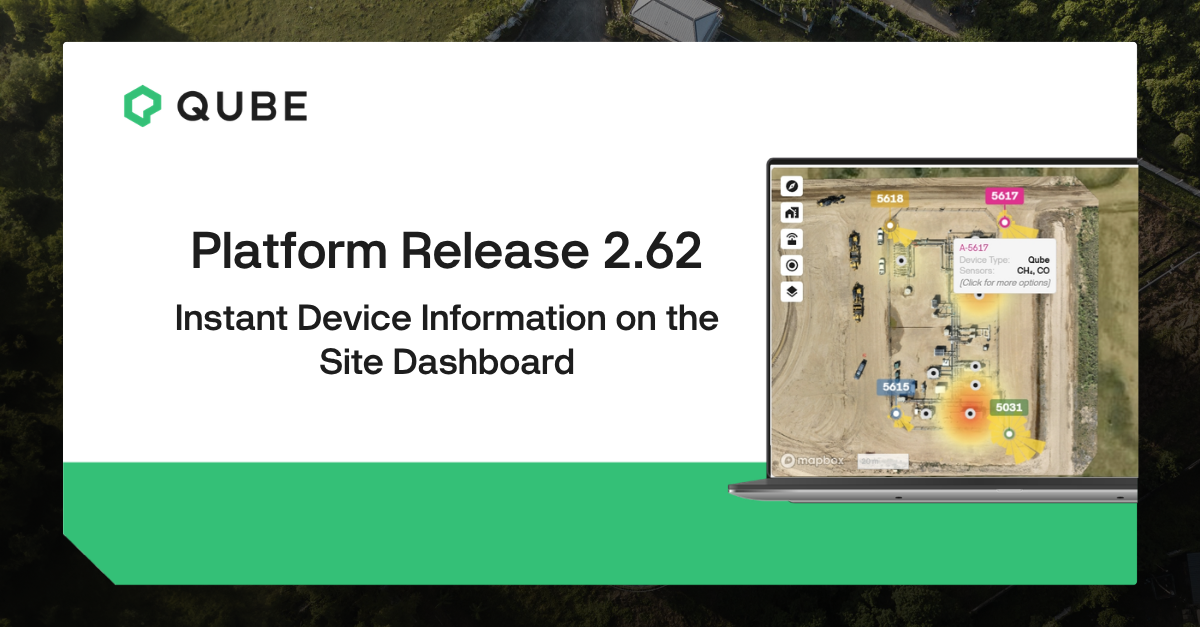
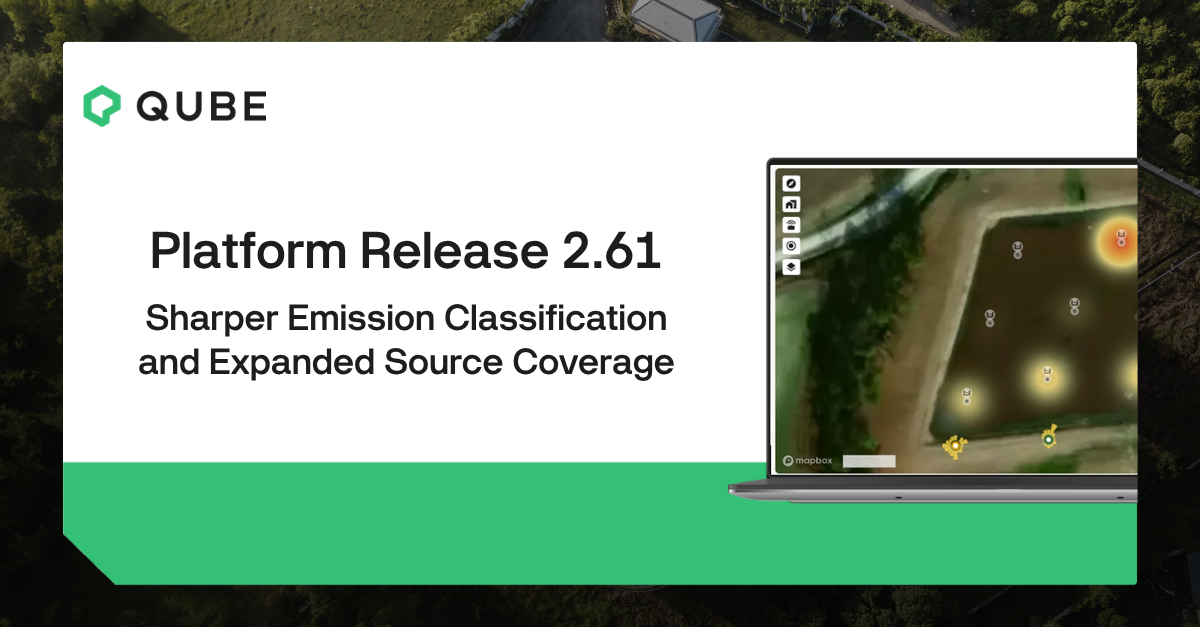
Release 2.61 adds more volume classifications for events and adds anchor trenches as a source category.
Fenceline and source-level emissions sensors are often treated as competing approaches, but the strongest monitoring programs use both. Fenceline Qubes excel at site-level detection and quantification, while source-mounted sensors like Qube Lite pinpoint exactly which piece of equipment is leaking. Deployed together, the two technologies compensate for each other's blind spots, delivering cost-effective, comprehensive detection, localization, and quantification.
MiQ Certification is changing how natural gas is evaluated by linking methane performance to market value. This blog explains how the framework works, why continuous monitoring matters, and how operators can use measurement-backed data to strengthen certification, improve methane management, and access differentiated gas markets.
Qube’s continuous monitoring supports operators in their journey toward the OGMP 2.0 Level 5 Gold Standard. Here is an overview of the framework, its significance, and how Qube facilitates a seamless transition to Level 5 reporting.
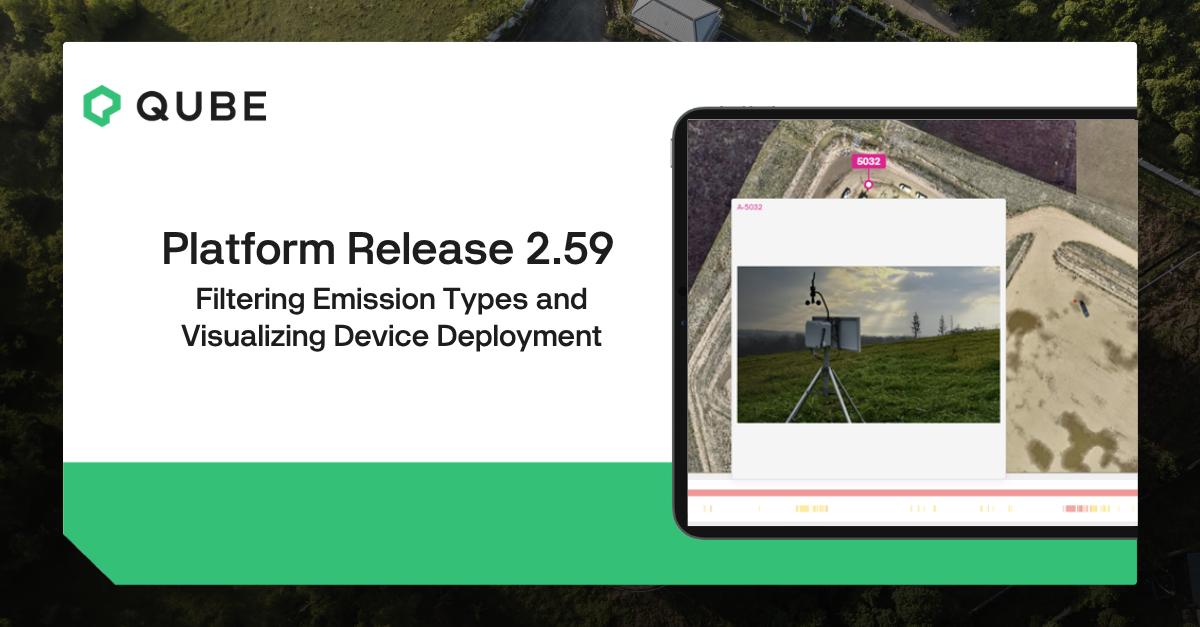
Release 2.59 helps users classify and review emission types faster and gives clearer visual context for devices deployed in the field.
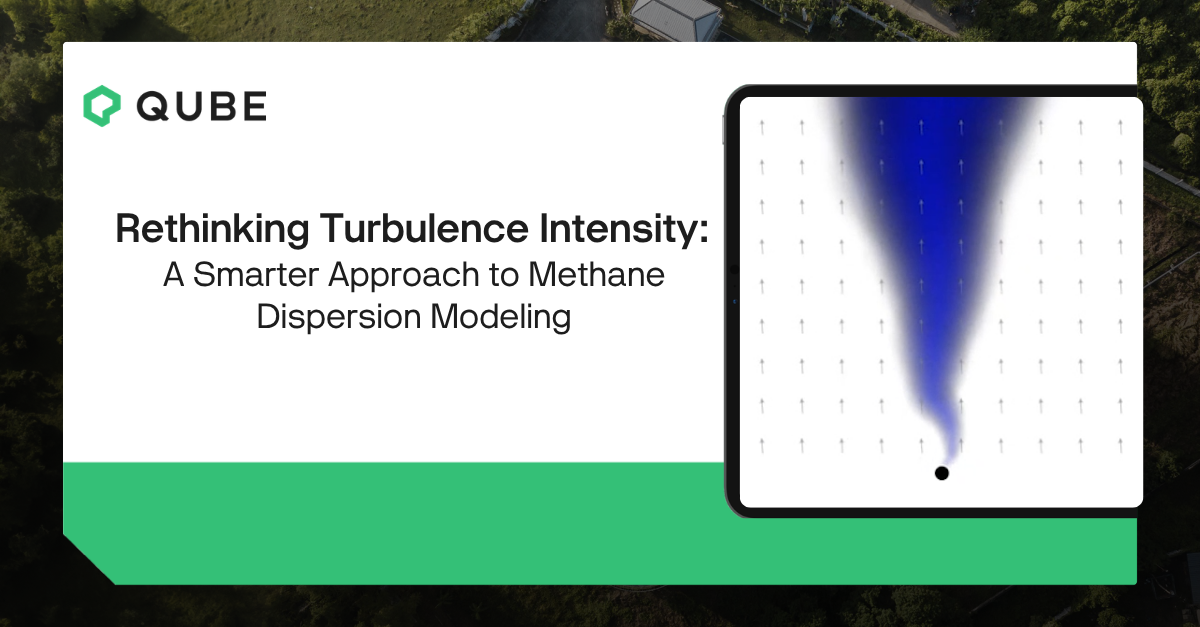
Emission models are just as important as the devices used to detect methane.
Here, we show how we have improved our emissions model to better account for turbulence, the rapid fluctuations in wind direction and speed that drive dispersion.
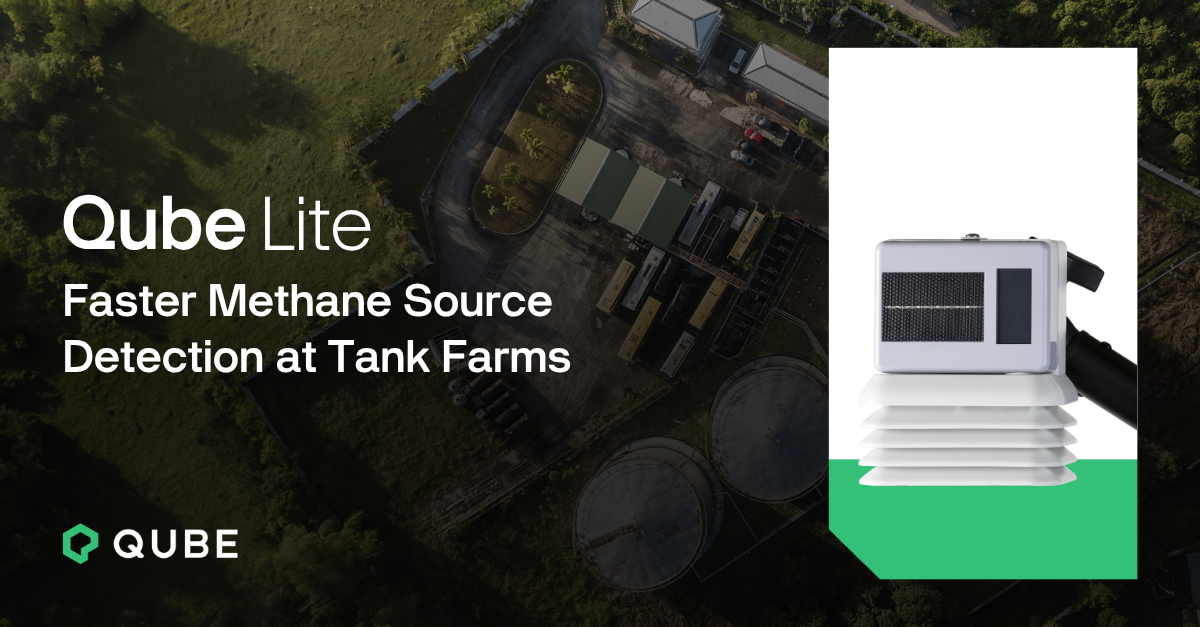
When potential methane sources are located close together, how do you know which unit is actually emitting?
This case study shows how Qube Lite, our new intrinsically safe methane sensor, helps operators distinguish emission source from a single tank at a tank farm.
Qube's site dashboard makes it simple to visualize emissions, spot trends and track repairs.
This walkthrough shows how the platform connects to site equipment and monitoring devices, including Qube Fenceline, Qube Lite and Qube Camera.
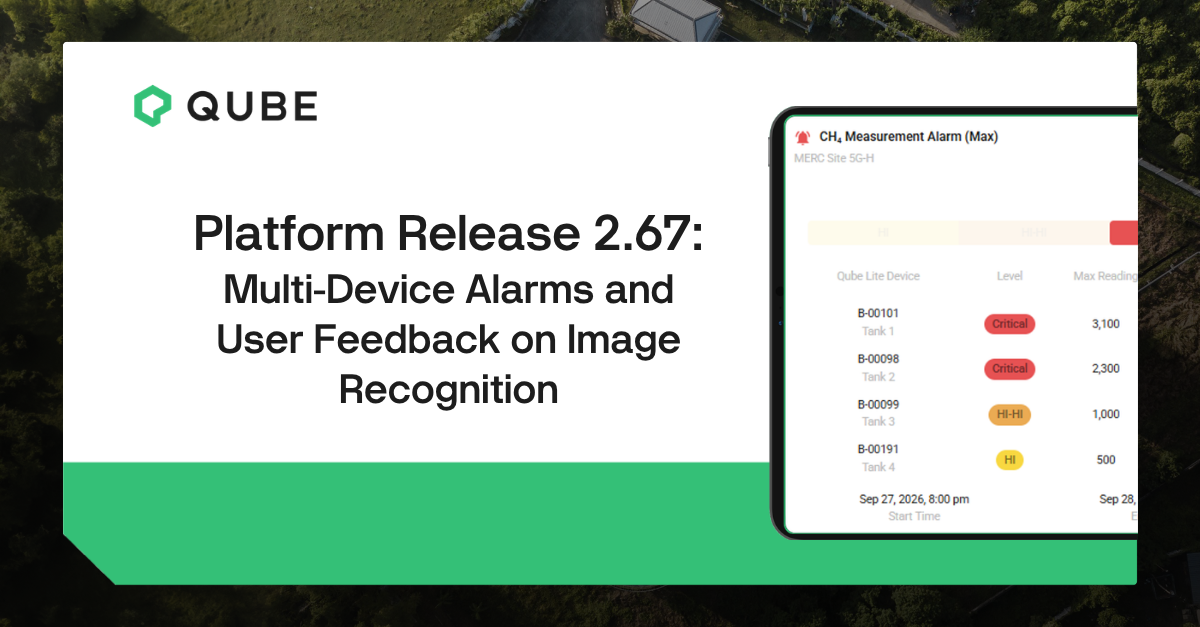
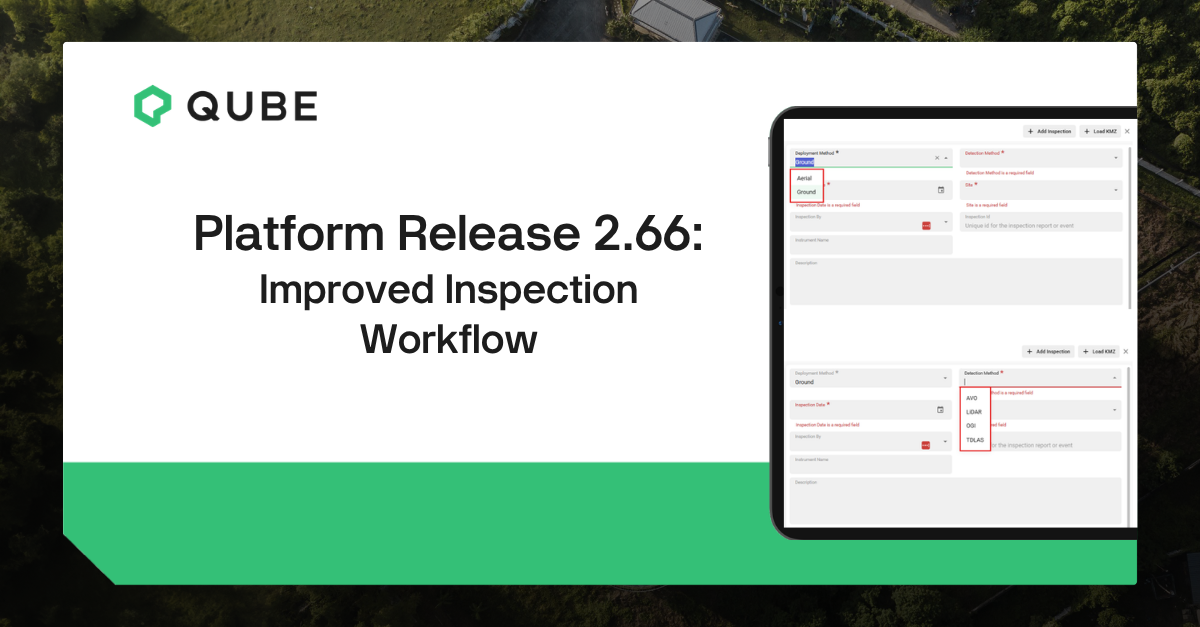
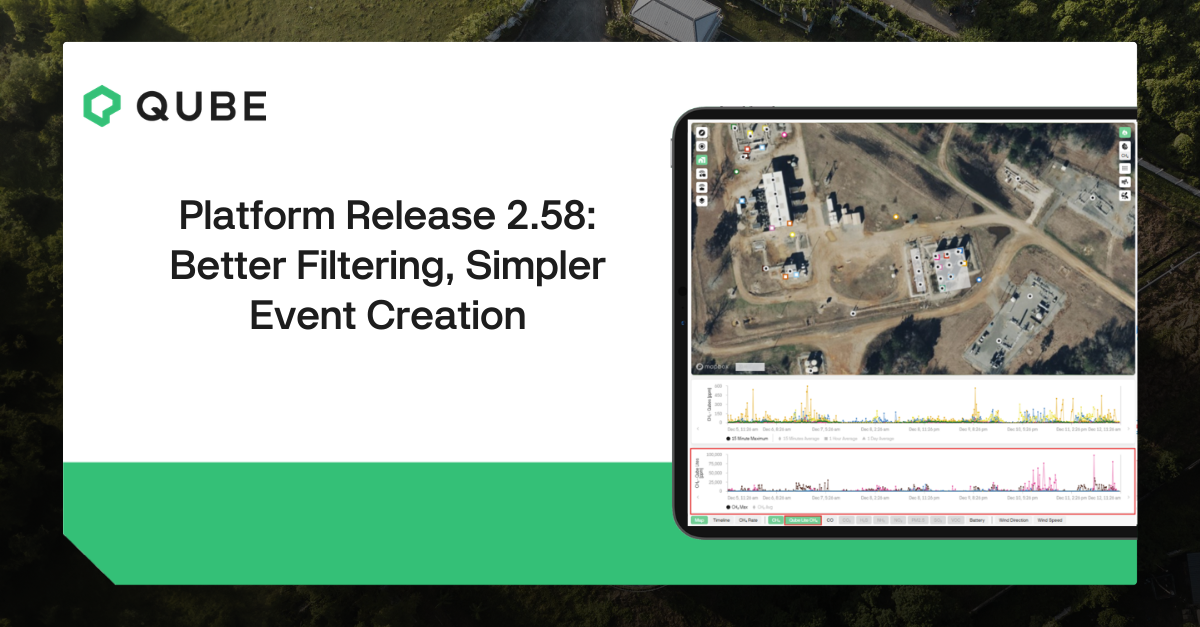
Release 2.58 helps you focus on the emissions that matter, streamlines day-to-day workflows, and keeps alarm follow-up clear.
Qube now delivers equipment-level monitoring (Qube Lite) and imaging (Qube Camera) integrated directly with your process data (e.g., SCADA). By combining emission data with real-time process information, operators gain the context needed to distinguish between routine operations—like venting or blowdowns—and actual equipment failures.
Beyond oil and gas, continuous monitoring is an established technology for managing emissions at diverse sites like landfills, mines, and biogas facilities. Qube Technologies recently shared results from a validation program conducted in partnership with FluxLab, focusing on landfill methane detection at scale.
CALGARY, AB – Qube Technologies (“Qube”), the global leader in continuous emissions monitoring, is pleased to announce the successful closing of a new funding round led by existing investors TC Energy with participation from NGIF Capital and other strategic investors. This capital infusion follows a landmark 2025 for the company and is earmarked to accelerate the deployment of Qube’s expanded product portfolio across several industries.
Release 2.57 delivers updates to the Emissions Timelines, Event Log page, and Alarm email notifications.
Here we show how improvements to our source modeling resulted in better detection of emissions at heights - like storage tanks. These results are verified by blind, third-party testing at METEC in 2025 where Qube’s continuous monitoring detected all releases from heights during the testing period.
White papers
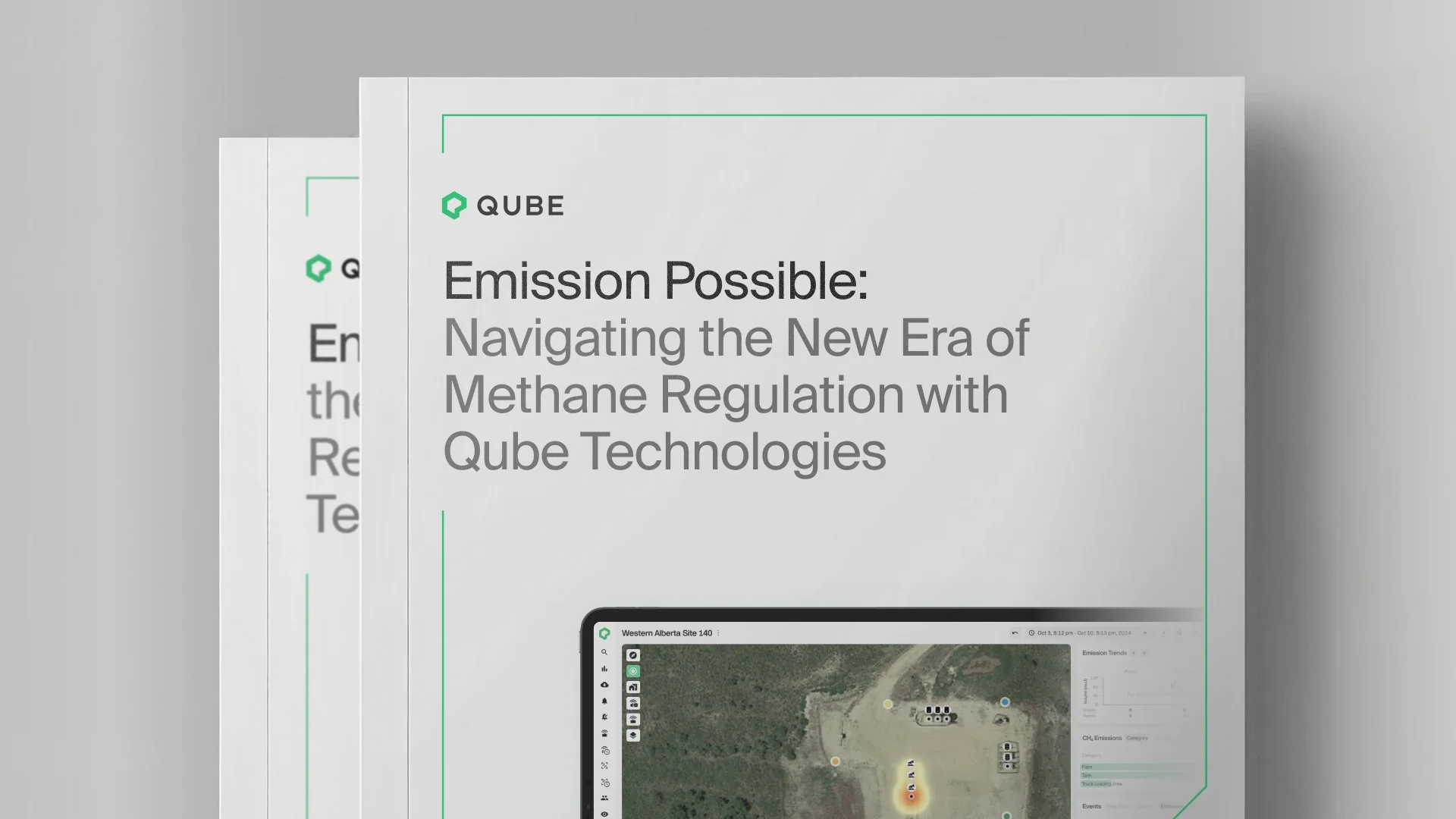
Deep dives into emissions monitoring, data science, and operational insights from our technical experts
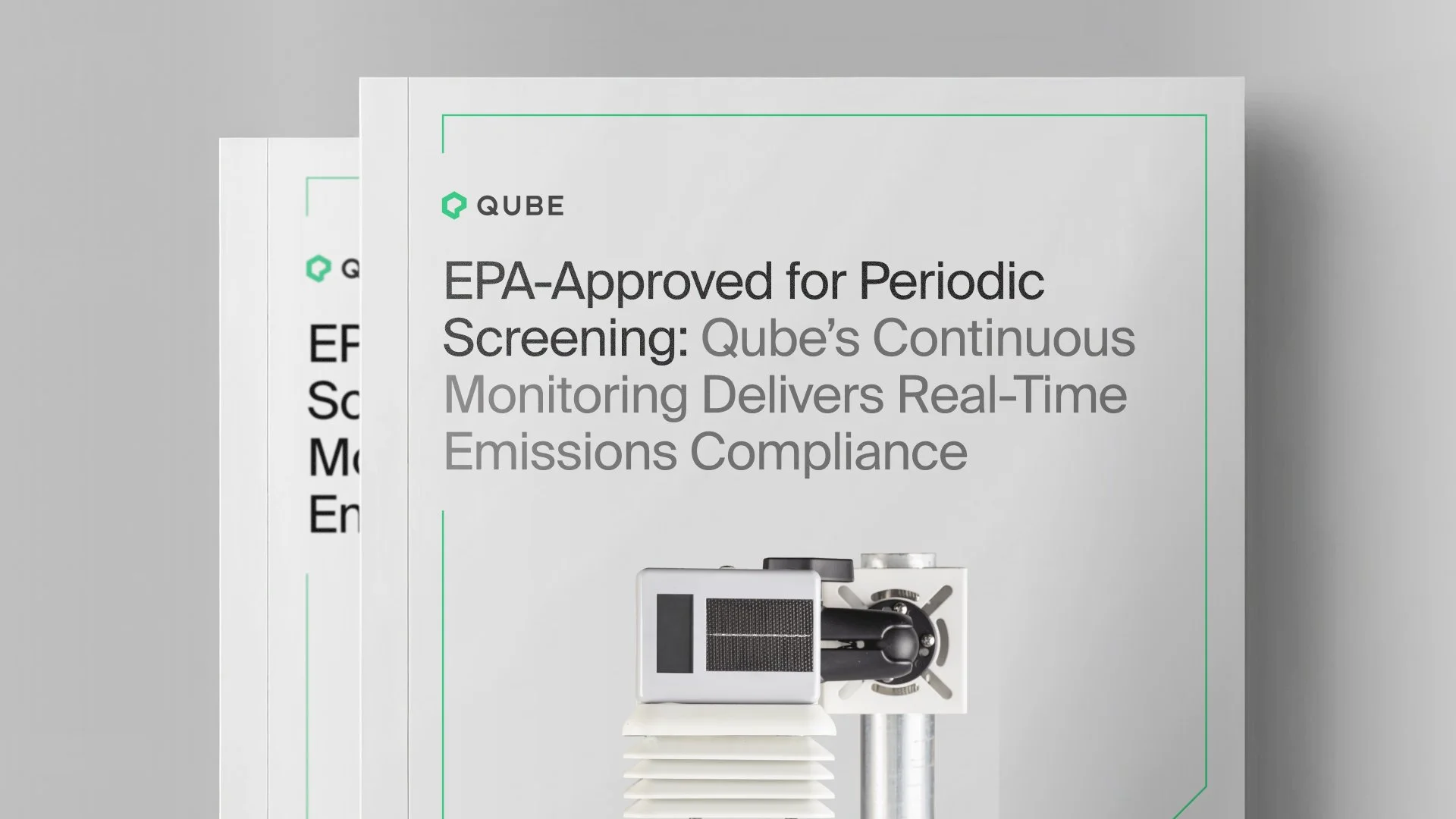
Qube won EPA approval in March 2025 as an alternative test method for methane periodic screening, letting operators use continuous monitoring instead of or alongside OGI surveys.
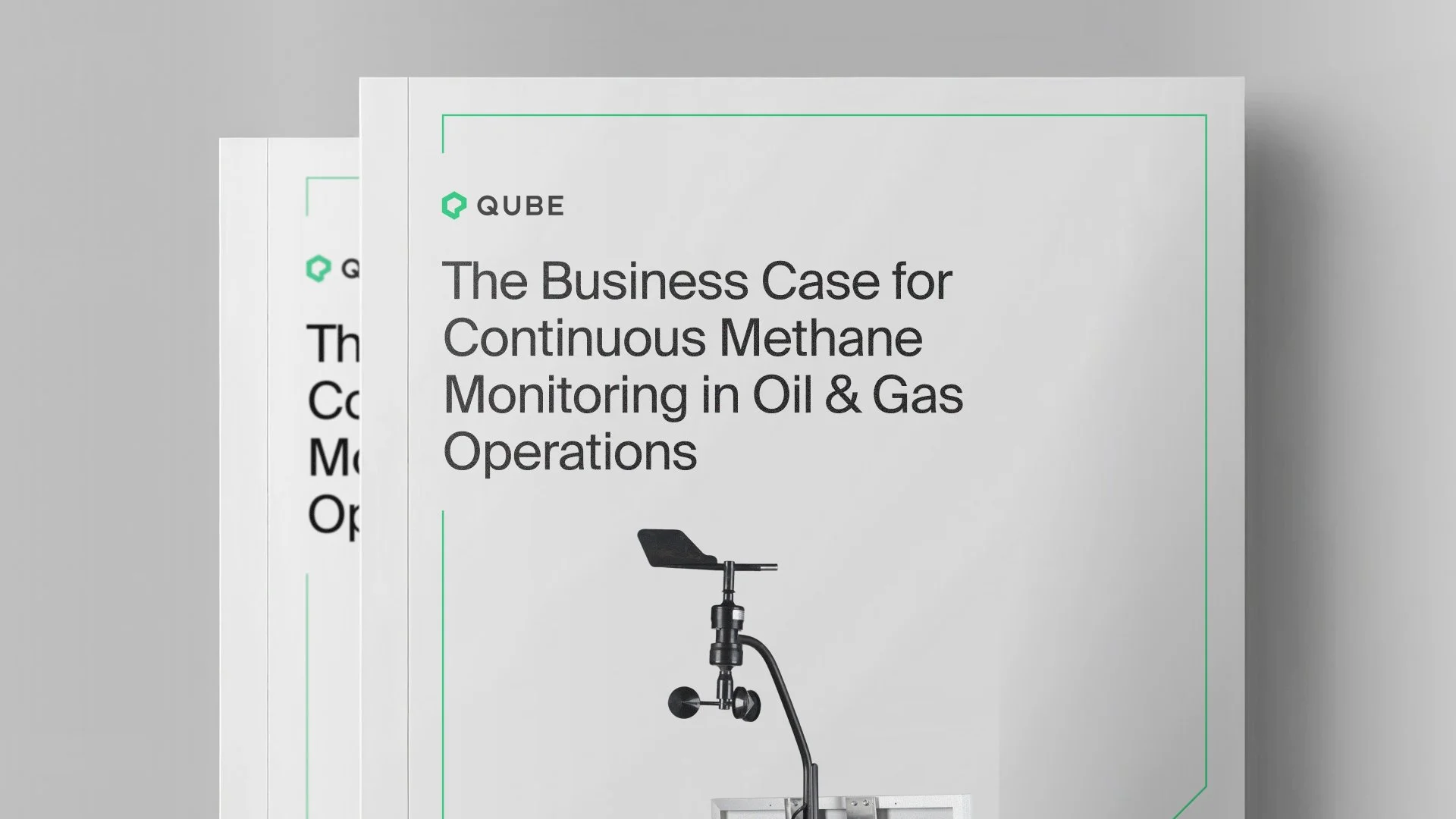
This paper lays out why continuous monitoring beats periodic inspections, pointing to faster leak detection, methane cuts of up to 95 percent, and lower compliance costs.
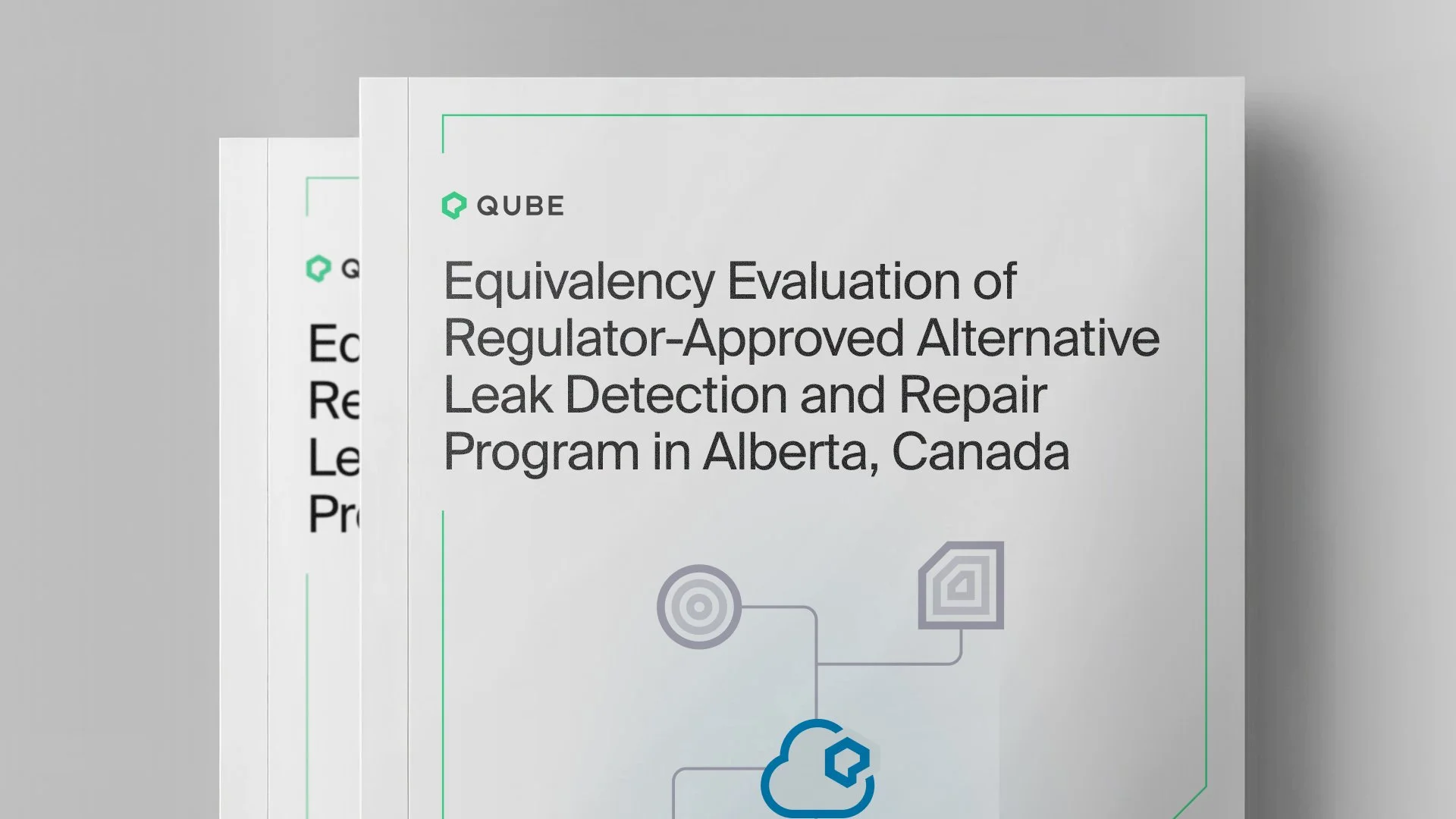
An SPE-presented study testing continuous monitoring against conventional LDAR in Alberta found it could roughly double emissions reductions versus standard inspection programs.
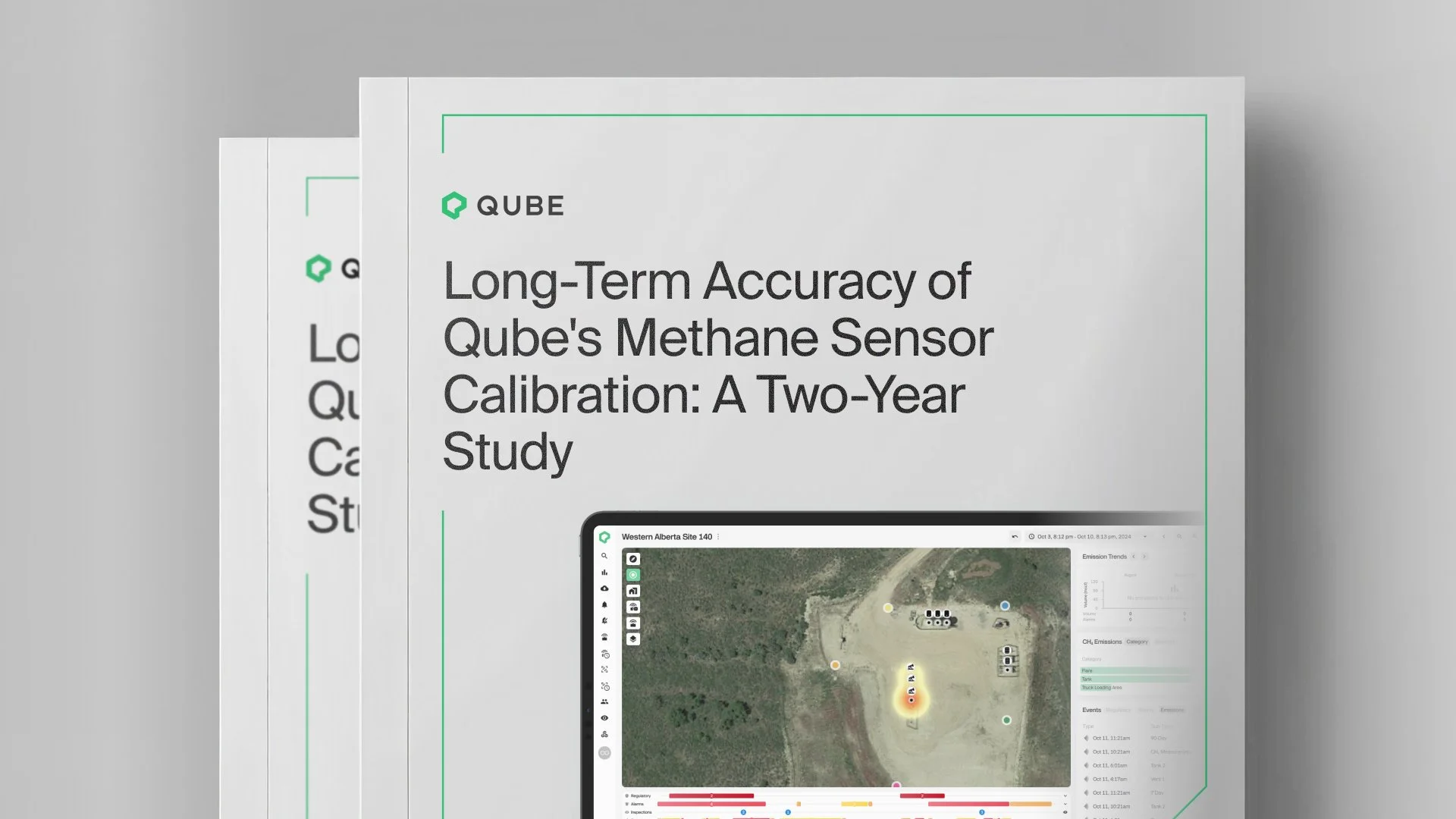
A two-year field test found Qube's sensors held accuracy within 1 PPM, with an auto-baselining algorithm correcting for drift without manual recalibration.
A Permian Basin operator cut its response time to leaks from 91 days down to under 24 hours, and monthly methane emissions dropped 79 percent over a year.
A field pilot of 52 devices across 16 Alberta facilities showed continuous monitoring catching leaks in days rather than waiting for annual inspections, cutting some sites' emissions by 60 percent.
Independent controlled-release testing by Highwood Emissions Management measured how reliably Qube's devices detect leaks at varying distances, wind speeds, and release rates.
With EPA's Super Emitter Program now naming operators publicly for large releases, this paper shows how continuous monitoring helped customers cut average emission rates and super-emitter events by up to 90 percent.
Online events
Conversations with Qube’s leaders shaping the emissions monitoring landscape
Ready for a clearer view
of your operations?
of your operations?
Ready for a clearer view
of your operations?
of your operations?