Verifying Methane Reductions with Continuous Monitoring: Upgraded Pneumatic Controllers Drive 80% Reduction
TL;DR
Colorado Reg 7 mandates non-emitting pneumatic controllers across oil and gas facilities. Greenfield sites must install zero-bleed; brownfields phase out inventory.
One operator installed compressed air pneumatics to replace gas. Upgrades targeted Reg 7 compliance and fewer methane sources.
Qube’s continuous monitoring was operating before pneumatic upgrades. Dashboard showed >80% month-over-month methane reduction.
Sites already emitted below baseline; upgrades immediately reduced further. Continuous monitoring verifies performance and supports transparent regulatory reporting.
Technical leaders should treat continuous monitoring as core infrastructure. It establishes baselines, confirms mitigation, and strengthens stakeholder trust.
The Regulatory Mandate: Colorado Reg 7 Pneumatic Controller Upgrades
Colorado’s Regulation 7 mandates a decisive shift toward non-emitting pneumatic controllers across upstream and midstream oil and gas sectors. Operators must replace existing natural gas-actuated devices with zero-bleed technologies, such as instrument air or electric actuation, to eliminate fugitive methane emissions. For greenfield (new) facilities, the installation of venting natural gas-driven controllers is strictly prohibited, while existing brownfield sites are subject to tiered company-wide retrofit schedules designed to systematically phase out emitting inventory.
The Engineering Solution: Compressed Air Pneumatic (CAP) Systems
To meet Reg 7 compliance deadlines, one Colorado operator implemented compressed air pneumatics (CAP) systems. This strategy replaces methane emissions from pneumatic controllers with clean, dry air. This upgrade aligns with the operator’s goals: 1) achieve Colorado Reg 7 compliance for pneumatic devices and 2) continuously reduce the number of emission sources and the overall methane released on site.
Verifying Impact: Continuous Methane Monitoring
This operator had Qube’s fenceline continuous monitoring solution deployed prior to pneumatic upgrades. While traditionally used for leak detection, continuous monitoring provides a powerful, objective method for setting emissions baselines, tracking trends, and rapidly verifying the impact of operational changes and equipment upgrades. Specifically, the continuous monitoring dashboard reflected a reduction in month over month methane emissions of >80%.
It’s important to note these sites were already operating efficiently below their emissions baselines. From Qube’s dashboard, the operator immediately observed reductions to the emissions levels thus confirming the expected emissions reductions from the upgrade (Fig. 1). Finally, the continuous monitoring provides defendable data to back up the upgrades, to be shared within the company, with stakeholders and regulators as needed.
“These installs help with Reg 7 pneumatics compliance of course, but my favorite is seeing the immediate responses on our continuous monitoring. It’s immediate and dramatic.”
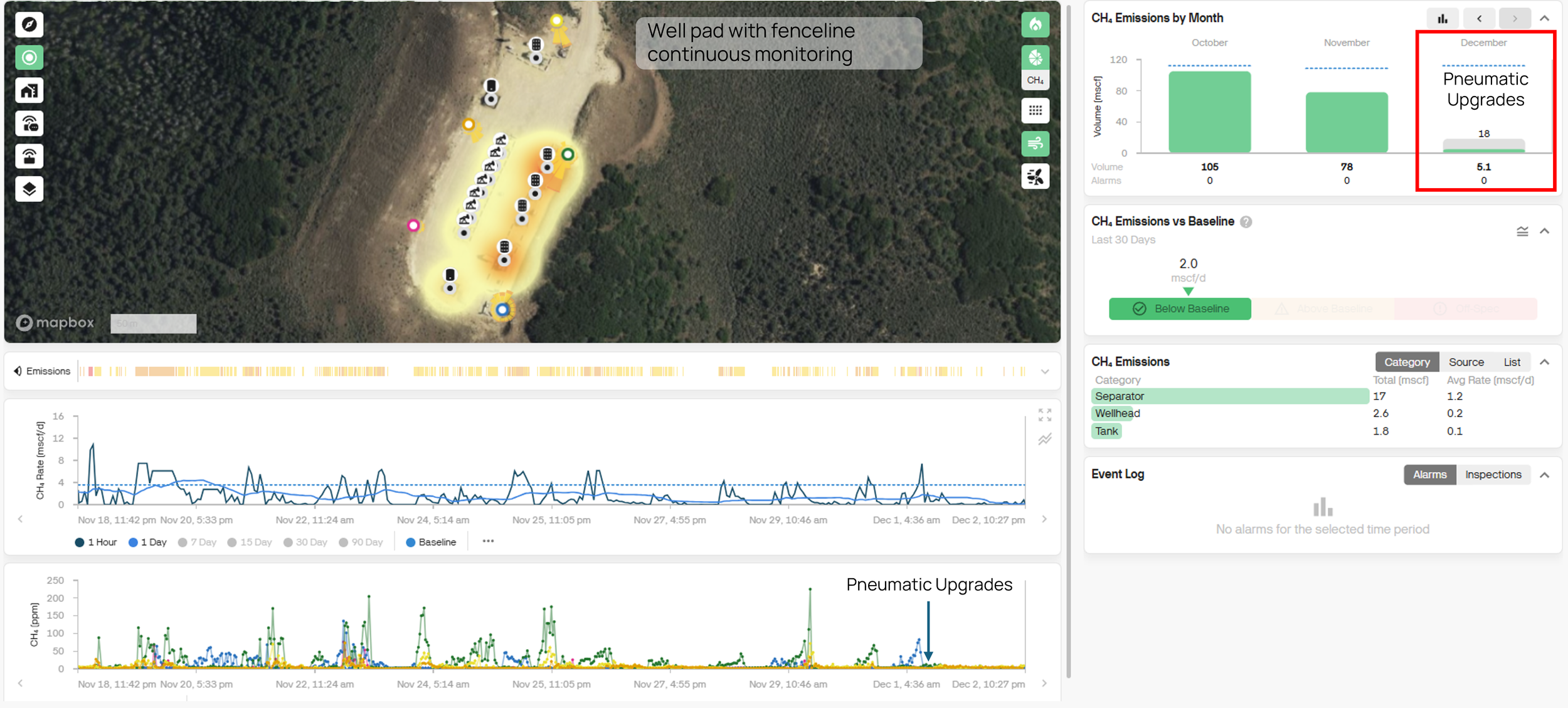
Figure 1. Qube’s continuous monitoring dashboard visualizes the methane reduction realized immediately following pneumatic upgrades.
Key Takeaways for Technical Leadership
As continuous monitoring improves (for example, Qube’s own move from single-source to multi-source modeling), it’s considered more than a pure leak detection tool towards an integral part of the operational landscape.
Here’s how it helped in this case:
Establish Baselines: sets a clear pre-upgrade baseline emission level.
Verify Mitigation: provides immediate, objective, and trackable evidence of emission reductions following pneumatic retrofits.
Enhance Transparency: The consistent approach to data collection and reporting enhances transparency, which is a key goal of Regulation 7 updates.
FAQs
-
The Colorado Department of Public Health & Environment's Air Quality Control Commission has approved updates to further reduce methane emissions and other air pollution from the oil and gas sector. The commission updated Regulation 7, addressing natural gas-driven pneumatic controllers and pumps used in oil and gas pre-production and early production operations. Operators with facilities in areas not meeting federal health standards for ozone pollution must phase out 100% of methane emissions from pneumatic devices by May 2027. Operators in other areas must phase out 100% of their methane emissions by March 2029. The rulemaking also standardizes requirements for monitoring equipment, data collection, and data reporting during pre- and early-production oil and gas operations. This "consistent approach" is aimed at enhancing transparency, making it easier to track and compare air quality data.
Reference:
Oil and gas compliance and recordkeeping | Colorado Department of Public Health and Environment
-
Objective Verification: Continuous monitoring provides real-time, objective data to establish a solid emissions baseline before the upgrade, followed by immediate, measurable verification of the methane reduction after the new zero-bleed controllers are installed.
Compliance Defensibility: The system generates a robust, hour-by-hour audit trail, offering verifiable data for regulatory compliance that moves beyond generic emission factors, supporting mandated reporting requirements under Colorado Reg 7.
Performance Tracking: Continuous monitoring confirms the long-term integrity of the CAPEX project by ensuring the new non-emitting solutions remain operational and immediately alerting the team if new or recurring methane emissions appear.
Enhanced Transparency: The ability to track and display quantifiable reductions in real-time enhances transparency with internal teams, stakeholders, and regulatory bodies, promoting the consistent, data-driven approach prioritized by the latest regulations.
Got Questions?
If you’ve got any questions about these features or any Qube products, connect with our specialists at Qube Technologies.
For more insights into how Qube Technologies is driving emissions reduction, explore our expert insights, white papers, case studies or reach out directly.