

Expert Industry Insights
Get unique insights from Qube Technologies' experts to make better decisions and foster innovation.
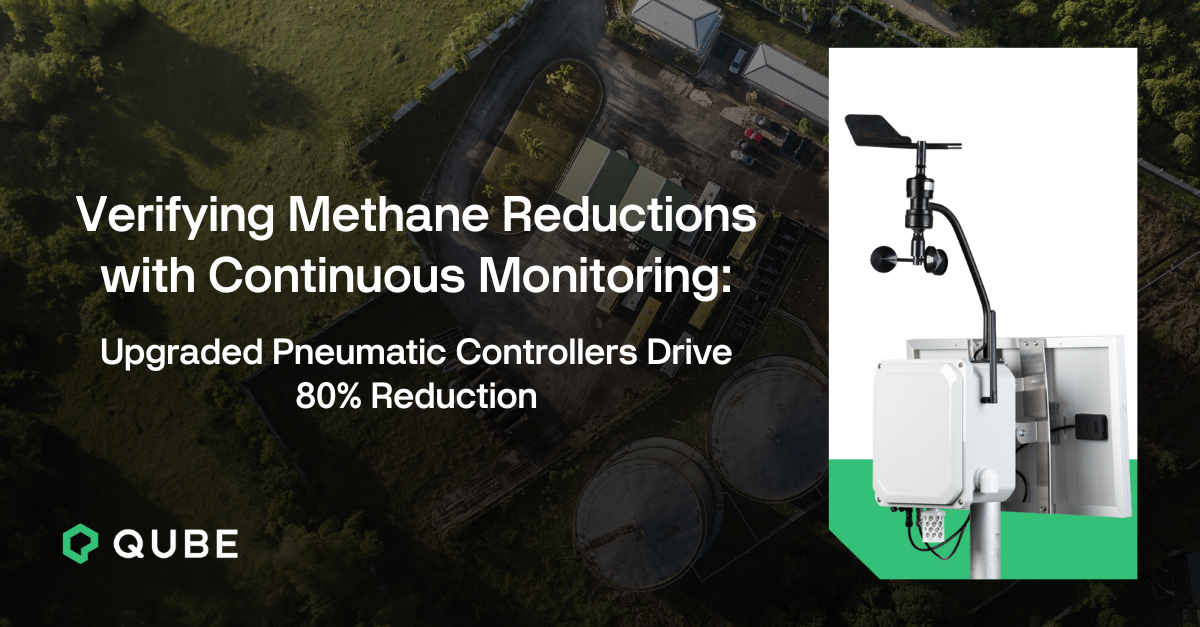
Verifying Methane Reductions with Continuous Monitoring: Upgraded Pneumatic Controllers Drive 80% Reduction
Colorado’s Reg 7 requires operators to eliminate methane-emitting pneumatic controllers and prove that new systems cut emissions. This operator replaced gas-driven devices with compressed air pneumatics, then used Qube’s continuous monitoring to establish a pre-upgrade baseline and quantify performance after startup. The fenceline sensors showed an immediate, sustained methane reduction of more than 80 percent, even at sites that were already operating below baseline. For engineering and technical leaders, this project shows how continuous monitoring can validate CAPEX decisions, de-risk compliance, and create a defensible data record for regulators and internal stakeholders.

Time-Bounding Large Release Events with Continuous Monitoring
Most LDAR methods capture only a snapshot, so they miss when an event starts, when it ends, and how long it lasts. Without that timeline, it can be challenging to quantify released volume, verify repairs, or determine whether the source is constant, intermittent, or tied to specific operations. Qube’s continuous monitoring provides 24/7 data that time-bounds emission events, enabling accurate volume estimates and confident repair verification.

Fewer Site Visits, Faster Repairs: Results from Qube’s EPA-Approved Periodic Screening
In March 2025, EPA approved Qube continuous monitoring as an alternative technology for periodic inspections under NSPS OOOOb/c ( and applicable to OOOOa). Here we detail how it works. Pick a 7-day window and a 90% PoD threshold. The 7-day block average either passes or fails, and crews conduct site inspections only upon fails. The results are less routine visits, faster repairs, and reduced costs across sites.

How Qube’s Continuous Monitoring Found Leaking Level Controllers After Well Restart
A Colorado well pad restarted after a non-routine shut-in. Within hours, Qube’s continuous monitoring flagged methane levels consistent with a large release event (estimated at >100 kg/h, about 125 mscf/d). The operator’s LDAR team located badly leaking level controllers and multiple thief hatches and completed repairs in under 24 hours. The operator then initiated a fleet-wide replacement of aging controllers to prevent recurrence.

Qube’s Continuous Monitoring Uncovers Blocked Vent Line: Emissions Drop 80% at Colorado Wellsite
At a Colorado wellsite, Qube’s continuous monitoring system alerted operators to a sustained emission event. Qube’s data localized the emissions to the tank area and prompted a field investigation to verify the source of the anomaly. With this information, the team was able to identify the emission source and interrogate the root cause, a blocked vent line leading to the combustor.

Rapid Leak Detection in the Piceance Basin: How Qube Helped Catch A Separator Leak
In Colorado’s Piceance Basin, a leading operator continues to set the bar for emissions control and operational safety. By integrating Qube Technologies’ continuous methane monitoring system, the operator aimed to strengthen its LDAR program and protect nearby homes located within 1,000 feet of its well pad.
This case study details how real-time alarms and accurate emissions source localization led to rapid action at the wellsite. Notably, catching a high-volume leak at the separator from going unnoticed over the weekend.
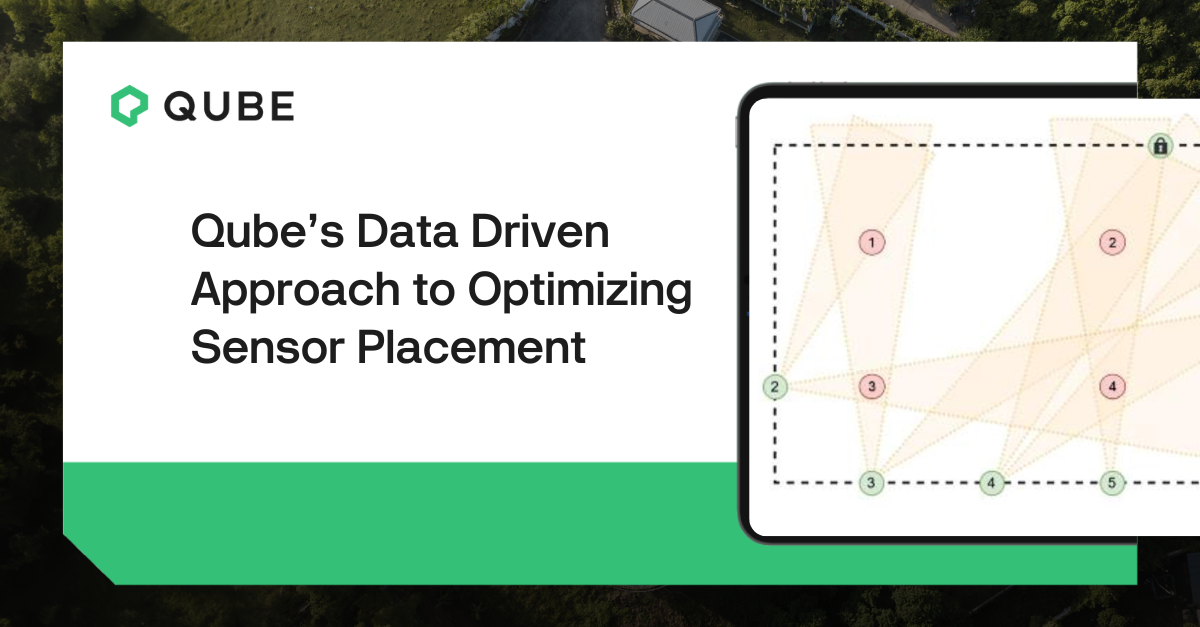
Qube’s Data Driven Approach to Optimizing Sensor Placement
Strategic sensor placement is critical for reliable, real-time methane detection. Detection depends not just on technology, but on understanding wind behavior, emission sources, and site constraints.
Qube’s deployment methodology uses historical wind data, source mapping, and MILP-based optimization to design sensor arrays that maximize detection coverage and minimize false negatives.
The Qube deployment tool turns this methodology into a practical workflow—helping operators visualize trade-offs, configure sensor layouts, and balance detection accuracy with budget.

How Qube’s Automated Alarms Caught a Cow at the Wellsite
A Colorado operator using Qube’s continuous methane monitoring system received an automated alert about an unexpected emissions spike at a wellhead. Upon investigation, the field team discovered the source: a cow had rubbed against the equipment and opened a manual ball valve, unintentionally releasing gas. The team quickly shut the valve, restored normal readings, and installed fencing to prevent similar incidents. Thanks to Qube’s real-time alerts, the issue was resolved within an hour—without downtime or emissions escalation.
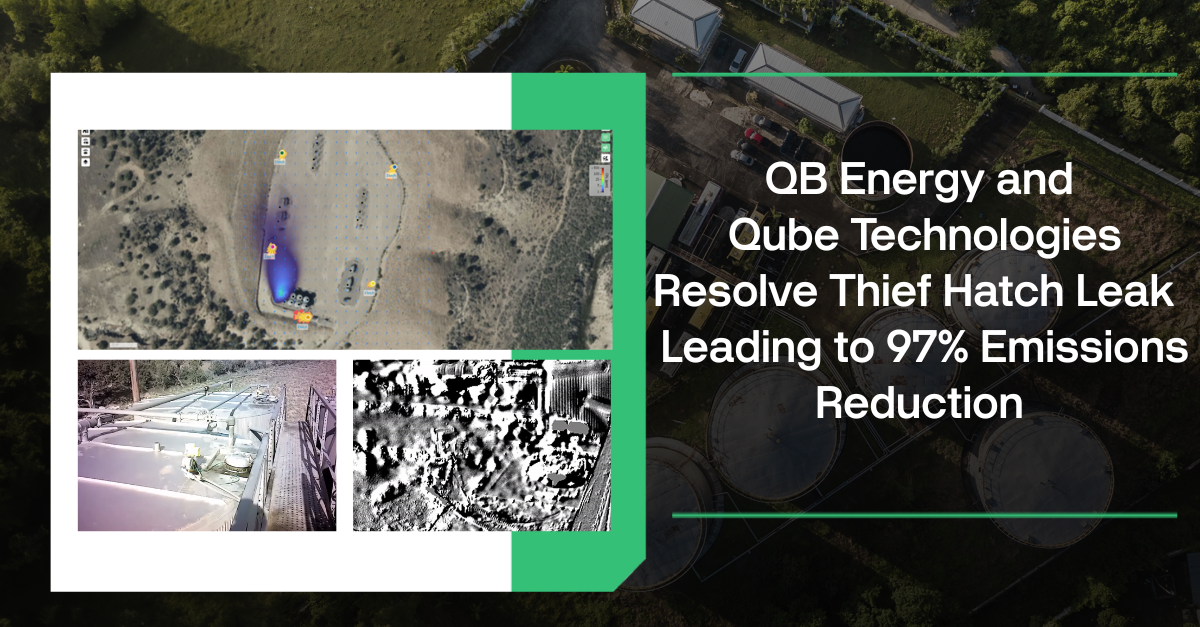
QB Energy and Qube Technologies Resolve Thief Hatch Leak Leading to 97% Emissions Reduction
“Another Win for Continuous Monitoring”
-Air Compliance Manager-QB Energy
Missed by AVO, caught by continuous monitoring. When Qube Technologies flagged elevated methane at a QB Energy tank site, field teams were able to locate and fix a leaking thief hatch—achieving a 97% emissions drop in hours. This case study shows how real-time continuous monitoring data and a fast response can keep operations running smooth.

How Qube Helped One Permian Operator Detect Offsite Emissions
Qube Technologies’ continuous emissions monitoring solutions provide operators with the tools to differentiate offsite from onsite emissions. Furthermore, our data modeling and intuitive dashboard omit those outside emissions from your facility total.

EPA Deregulation and Methane Monitoring: What Operators Need to Know
The EPA is pushing its most aggressive deregulatory effort yet, aiming to roll back key methane regulations. However, legal and procedural roadblocks could stall or block these changes, leaving operators in regulatory limbo. For now, existing EPA rules—like quarterly LDAR inspections—remain in full force. With legal battles expected to drag on for years, proactive methane monitoring is essential for compliance, asset integrity, and investor confidence. Stay ahead of the uncertainty—here’s what you need to know.

Congress Votes to Repeal EPA’s Waste Emission Charge (WEC) Implementing Rule
Congress has voted to repeal the EPA’s Waste Emissions Charge (WEC) rule, also known as the methane fee, which imposed financial penalties on large methane emitters in the oil and gas sector. While this eliminates the direct fee, EPA methane reporting requirements and state regulations still apply, meaning operators must continue monitoring and reporting emissions.

Methane Rules in Flux - What’s Changing & What Operators Need to Know
With the new Trump administration, methane regulations are in flux - but compliance remains essential. While some rules are being reviewed, others remain in effect, and operators need to stay prepared. Here’s a quick breakdown of what has changed (and what hasn’t) since Trump took office.

Don’t Let Third Parties Call Out Your Super Emitters: Stay Ahead with Qube’s Continuous Monitoring Solutions
Qube Technologies’ continuous emissions monitoring solutions provide operators with the tools to detect and respond to emissions trends before they become super emitter events. By configuring real-time alarms, operators can take corrective action immediately, preventing third-party reports and ensuring regulatory compliance.

Maximizing Revenue from Farm RNG: Continuous Monitoring to Keep Your Product in the Pipe
Qube’s platform offers real-time leak detection, efficient alerting, and odor management, enabling RNG operators to maximize revenue, enhance safety, and reduce emissions.

U.S. Election 2024: Implications for Methane and Emissions Regulations Under a Republican Trifecta
Qube Technologies remains proactive in supporting EPA compliance, offering continuous monitoring solutions with advanced tracking features. Qube has also applied to have its technology recognized as an alternative for NSPS OOOOb/EG OOOOc standards, positioning clients for seamless adaptation to changing requirements.

Navigating US Methane Regulations: Qube’s Continuous Monitoring Solutions for Proactive Compliance
Evolving regulations demand operator compliance to ensure efficient and cost-effective operations. Qube, a leader in continuous methane monitoring, helps clients across industries, including oil and gas, meet these regulatory challenges.